

Choosing a lash manufacturer is not a beauty decision alone. It is a product-quality, cash-flow, and brand-trust decision. A polished sample or a low quote may get your attention, but neither tells you whether the next five batches will match, arrive on time, and meet the requirements of your market.
If you are learning how to evaluate lash manufacturers, look for evidence you can compare: written specifications, samples from more than one production run, quality records, clear pricing, realistic lead times, and a workable response when something goes wrong. This guide shows you how to turn those checks into a repeatable sourcing process.
Quick answer: how should you evaluate a lash manufacturer?
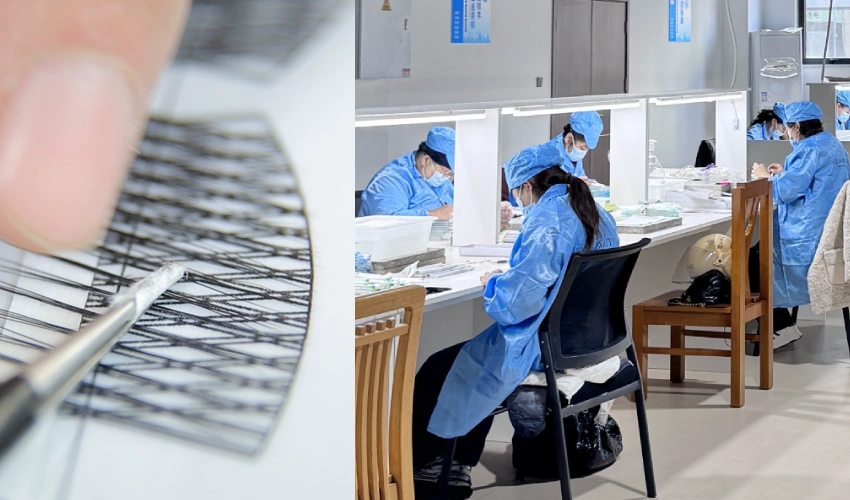
You should evaluate a lash manufacturer in five stages:
- Define exactly what you want the factory to make.
- Verify the business, factory, materials, and production system.
- Test samples against the same written checklist.
- Compare quality control, compliance support, capacity, cost, and service.
- Place a controlled pilot order before you scale.
Do not choose a supplier because one sample looks good. Choose the manufacturer that can explain how it will reproduce your approved product, identify each batch, correct defects, and support your next order.
Key takeaways
- Compare every manufacturer against the same written product brief.
- Test more than one sample round when repeatability matters.
- Verify certificates, registrations, and reports instead of trusting a logo.
- Calculate landed cost, including packaging, inspection, freight, defects, and inventory.
- Scale only after the manufacturer passes a controlled pilot order.
1. Start with a product brief, not a request for “premium lashes”
You cannot compare manufacturers fairly if each one is quoting a different product. Before you contact a factory, write a short product brief that describes the customer, use case, performance target, packaging, quantity, and destination market.
At minimum, define:
- Product category: strip lashes, clusters, premade fans, individual extensions, magnetic lashes, or a kit
- Fiber or material preference
- Curl, length, thickness, density, color, finish, and mapping
- Band or base construction
- Comfort, pickup, curl-retention, and wear expectations
- Tray, box, insert, label, barcode, and carton requirements
- Estimated quantity by SKU
- Target launch date and destination country
- Acceptable defects and how you will inspect them
Replace subjective phrases such as “very soft,” “luxury,” or “natural-looking” with a reference sample, clear photographs, measurements, or an approved tolerance. Your brief does not need to read like an engineering manual, but it must be specific enough for two factories to quote the same job.
If you need a cleaner request format, use HeyMe Beauty’s guide on how to ask a lash manufacturer for a quote.
2. Confirm who you are buying from
A manufacturer owns or controls production. A trading company or vendor may source from one or several factories. Either model can work, but you need to know which relationship you are entering because it affects price, communication, customization, traceability, and problem resolution.
Ask for the company’s legal name, business address, production address, years in operation, main product categories, and the name that will appear on the invoice and bank account. Then compare those details across the business license, quotation, website, email domain, and payment instructions.
You can also request:
- A live video tour that moves from the exterior sign to production, inspection, packaging, and warehouse areas
- Photos or videos showing your actual product category in production
- A simple production-flow chart
- A recent third-party audit, if one is available and relevant
- Customer references you are permitted to contact
Do not treat “factory direct” as an automatic guarantee of quality. A capable sourcing partner can outperform a poorly managed factory. What matters is transparency, control, and accountability. The comparison in lash vendor vs. lash manufacturer can help you decide which model fits your business.
3. Evaluate materials and construction for your lash category
“Premium fiber” tells you very little. You need to know how the finished product behaves.
For strip lashes, check the symmetry of the pair, fiber alignment, glue points, shedding, band thickness, band flexibility, knot visibility, curl balance, and comfort at the inner and outer corners. Wear the sample, remove it as directed, and record whether the band or lash shape changes.
For lash-extension trays, check whether the labeled curl, diameter, and length match the product. Look at taper, tip condition, base width, fiber finish, row alignment, strip tack, pickup, fan opening, and clean release from the strip. Have working lash artists test the product with the tweezers and technique your customers actually use.
For clusters or premade fans, inspect base size, bond points, symmetry, spacing, mapping, weight, and how easily each segment lifts without twisting or breaking. If the product is pre-glued or sold with a bond, evaluate the lash and the adhesive system separately.
Use several trays or pairs, not the most attractive item in the sample box. You are looking for variation within the sample as well as average quality.
4. Run a controlled sample test
Sampling is where you begin to see whether a supplier follows instructions. Send the same brief to three to five shortlisted manufacturers and ask each one to label every sample clearly.
Request at least two sample rounds from different production dates when the project is important or highly customized. The first round tests fit; the second tests repeatability. If both rounds are prepared as special showroom samples, you still have not learned how normal production performs, so ask how the samples were made and whether they came from a production lot.
Score each supplier in the same environment:
- Specification accuracy: Did the factory send exactly what you requested?
- Appearance: Are curl, length, density, color, and symmetry consistent?
- Handling: Do lashes release, fan, apply, and remove as expected?
- Comfort and performance: Does the product suit the intended wearer and use?
- Durability: Does normal handling, storage, and wear change the product?
- Cleanliness and packaging: Are trays, labels, inserts, and boxes accurate and undamaged?
- Communication: Did the supplier confirm details and explain deviations before shipping?
Keep one approved sample sealed as your “golden sample.” Photograph it, record its lot or production date, and attach the final specification. That becomes the reference for the pilot order, bulk inspection, and future reorders.
5. Look inside the quality-control system
A good final inspection is useful, but it cannot repair a weak process. Ask how the manufacturer controls quality at three points: incoming materials, production, and finished goods.
Useful evidence includes:
- Incoming-material specifications and acceptance checks
- In-process checks for curl, length, thickness, base, alignment, and assembly
- Defined defect categories and rejection rules
- Final inspection records
- Lot or batch identification
- Calibration and maintenance records for relevant equipment
- Staff training records or work instructions
- A written process for nonconforming products and corrective action
Ask the supplier to show you a redacted example, not only say that records exist. A lot code should connect the finished item to a production date, material lot, inspection result, and shipment. If the supplier cannot trace a complaint back to a batch, it will struggle to investigate a repeat-order problem.
For a deeper factory review, use this eyelash factory audit checklist and see how lash quality control works in a professional factory.
6. Verify documents for the product and destination market
The paperwork you need depends on what you are selling and where you will sell it. Plain false lashes, lash-extension adhesive, removers, cleansers, magnetic eyeliner, and electrical beauty tools do not share one universal document list.
Ask the manufacturer to explain which party is responsible for product safety substantiation, facility registration, product notification or listing, labeling, adverse-event records, and market surveillance. Confirm the answer with a qualified compliance adviser for your destination market.
When a supplier presents a certificate, check:
- The exact legal company name and manufacturing-site address
- The products and activities covered by the certificate
- The issuer and, where applicable, its accreditation
- Issue and expiry dates
- The certificate number in the issuer’s database
- Whether the document covers the factory or only a different company in the supply chain
For cosmetics, ISO 22716 gives guidelines for production, control, storage, and shipment. It is useful evidence of a structured system when it is relevant and properly implemented, but a certificate is not a substitute for inspecting daily controls.
For U.S. cosmetic products, the FDA explains MoCRA facility registration and product listing and makes an important distinction: registration or listing is not FDA approval, and the FDA does not issue promotional “approval certificates” for cosmetics. In the EU, cosmetic products require an EU responsible person and notification through the Cosmetic Products Notification Portal, where applicable.
If you source adhesive or another formula, ask for the documentation appropriate to that formula and market, such as a current Safety Data Sheet, ingredient information, batch test evidence, stability or shelf-life support, storage conditions, packaging-compatibility information, and compliant label content. Never accept a generic document borrowed from another formula.
Use how to compare lash manufacturer certifications as a practical verification checklist.
7. Test capacity, lead time, and repeat-order consistency
Headline capacity can be misleading. A factory may produce a large number of standard pairs while having limited capacity for hand-finished styles, mixed SKUs, custom boxes, or adhesive filling.
Ask:
- What is the normal and peak-season lead time?
- Which step is the bottleneck for your product?
- How many lines or trained workers can make it?
- Which work is subcontracted?
- How does the factory control subcontractors?
- How much notice is required for a repeat order?
- What happens if a key material is unavailable?
- How are urgent changes or delays communicated?
Compare the answers with the sample timeline and pilot order. A realistic range is more useful than an unusually short promise. You want a manufacturer that tells you about a risk early enough to act.
8. Examine customization and change control
Private label may mean adding your logo to an existing item. ODM usually starts from a manufacturer-developed product that you adapt. OEM generally involves a product made to your defined requirements. Suppliers use these terms differently, so describe the work instead of relying on the label.
Confirm what you can customize, who owns the artwork or tooling, whether the style is exclusive, and what happens to unused printed packaging. Approve the lash, tray card, box structure, print color, finish, barcode, warnings, lot code, and shipping carton before production.
Every approved change should be written into the specification. If a material, process, factory, or packaging component changes later, require notification and a new approval where the change could affect quality or compliance. HeyMe Beauty’s explanation of private label vs. OEM vs. ODM lashes helps you define the level of control you need.
9. Compare landed cost, not the headline unit price
The cheapest quotation can become the most expensive order after samples, setup fees, printing plates, custom inserts, inspection, freight, duty, storage, defects, and replacements are included.
Build a landed-cost comparison with:
- Product price by SKU and quantity tier
- Sample and development fees
- Artwork, plate, mold, or tooling charges
- Inner packaging and export-carton costs
- Pre-shipment inspection
- Freight, insurance, duty, and taxes
- Payment or currency-conversion fees
- Expected defect, rework, or replacement cost
- Inventory carrying cost created by the MOQ
Confirm the Incoterm, payment milestones, quote validity, and what is excluded. A flexible MOQ can be valuable during testing even when the unit price is higher. Once demand is stable, you can compare the saving from a larger order with the risk of holding more inventory.
10. Treat communication as an operating test
Good communication is not simply fast replies. A strong manufacturer asks useful questions, repeats critical specifications, flags conflicts, and records decisions.
Watch how the supplier handles a deliberate test: change one detail in the brief and ask for a revised quote. Does the team update the price, sample, artwork, and lead time consistently? If information is scattered across email and chat, create one approved order summary and ask both sides to sign off before you pay the deposit.
Be cautious when answers stay vague, a salesperson agrees to every request without checking production, or payment details change without formal verification.
11. Review shipping, claims, and after-sales support
Before ordering, agree on the difference between sample lead time, production lead time, and transit time. Confirm when the clock starts: deposit, final artwork, or sample approval.
Ask how the factory protects trays and boxes from crushing, moisture, dirt, and label mix-ups. For a pilot or large order, use a pre-shipment inspection with an agreed sampling method and defect standard.
Your purchase terms should also state:
- The claim window after delivery
- Evidence required for a claim
- How defective quantity will be calculated
- Whether the remedy is replacement, credit, refund, or rework
- Who pays freight when the factory is responsible
- How urgent stock shortages will be handled
A supplier’s response to one small, documented issue often tells you more than its sales presentation.
12. Use a weighted scorecard and non-negotiable gates
Score manufacturers only after you have comparable evidence. You can start with this 100-point model and adjust it for your product:
| Area | Weight | What you are judging |
|---|---|---|
| Product quality and sample repeatability | 30 | Accuracy, comfort, handling, appearance, and consistency across rounds |
| Quality system and traceability | 20 | Incoming, in-process, final controls, lot records, and corrective action |
| Documentation and market support | 15 | Relevant, valid documents and clear responsibility for your destination market |
| Capacity and delivery | 10 | Realistic lead time, bottleneck control, and reorder planning |
| Landed cost and terms | 10 | Complete cost, MOQ fit, payment terms, and financial risk |
| Customization and change control | 5 | Artwork, specifications, ownership, approvals, and change notification |
| Communication | 5 | Accuracy, clarity, escalation, and written follow-through |
| Claims and after-sales support | 5 | Practical defect policy and timely remedies |
Set pass-or-fail gates as well. Do not approve a supplier with an unverifiable legal identity, mismatched payment account, repeated sample inconsistency, missing critical safety information, or refusal to document the product you are buying—even if its total score looks acceptable.
Red flags you should not ignore
Pause the evaluation when a manufacturer:
- Refuses samples, a live tour, or reasonable proof of production
- Uses only catalog photos and cannot show your product category
- Sends a sample that does not match the written specification
- Cannot explain its lot code or defect-handling process
- Presents expired, altered, irrelevant, or unverifiable certificates
- Promises an unusually low price or lead time without explaining how
- Pushes a large first order before you finish testing
- Changes the beneficiary or bank account without a verified company process
- Avoids written terms for defects, replacement, or delays
- Gives conflicting answers through sales, production, and accounting
One red flag may have an innocent explanation. A pattern means you should stop and verify before sending more money.
A safer first-order process
Use this sequence for a new manufacturer:
- Shortlist three to five suppliers.
- Send the same brief and quotation template to each one.
- Verify the company and production model.
- Complete two sample rounds when repeatability matters.
- Select a finalist with your weighted scorecard.
- Lock the specification, artwork, golden sample, inspection standard, and claims terms.
- Place the smallest commercially useful pilot order.
- Inspect before shipment and again on arrival.
- Review defects, delivery, communication, and sell-through.
- Increase volume only after the supplier repeats the result.
This approach may take longer than choosing from photos, but it is much faster than replacing a failed supplier after a launch.
Questions to ask a lash manufacturer
Keep these questions in your RFQ:
- Do you manufacture this product in your own facility?
- Which processes or components do you subcontract?
- How do you control curl, length, thickness, base, band, and finish?
- Can you provide samples from two production dates?
- How will you identify and reproduce my approved sample?
- What are your incoming, in-process, and final inspection steps?
- How do you define, record, and resolve defects?
- What lot or batch records will appear on my order?
- Which documents are relevant to this product and destination market?
- What is the MOQ by product, style, and packaging component?
- What fees are not included in the unit price?
- What are normal, peak-season, and repeat-order lead times?
- Who owns custom artwork, tooling, and product specifications?
- How will you notify me of a material or process change?
- What happens if the delivered order fails the approved standard?
FAQs
How many sample rounds should you request?
You should request at least two rounds from different production dates when consistency matters. Keep one approved sample as the control for bulk production and reorders.
Is a low MOQ a sign of a good lash manufacturer?
Not by itself. A low MOQ helps you test demand and reduce inventory risk, but you still need to compare quality, repeatability, total cost, lead time, and after-sales support.
Which certifications should a lash manufacturer have?
There is no universal list for every lash product and country. Ask for documents that apply to the product, manufacturing activity, and destination market, then verify the legal name, site, scope, issuer, and validity. Do not treat registration as product approval.
How do you know bulk production will match the sample?
You reduce the risk by using a written specification, two sample rounds, a sealed golden sample, lot traceability, change control, and an agreed pre-shipment inspection. No single step is enough on its own.
Is a manufacturer always better than a lash vendor?
No. A transparent vendor with strong supplier control may serve you well, while a poorly managed factory may not. Choose the partner that can prove control, consistency, and accountability.
Final takeaway
The best answer to how to evaluate lash manufacturers is to replace impressions with evidence. Define the product, verify the business, test repeatability, inspect the quality system, confirm market-specific documentation, calculate landed cost, and start with a controlled pilot.
When you follow the same process for every supplier, the decision becomes clearer. You are no longer choosing the prettiest sample or the lowest quote. You are choosing the partner most likely to protect your customers, your inventory, and your brand as you grow.
If you want to put this checklist into practice, review HeyMe Beauty’s false eyelash manufacturing options or request details for private label lashes. Ask for samples, a complete quote, and the product documents relevant to your market before you commit to bulk production.