

First time with cluster lashes? You step back from the mirror and they almost look right, but something feels off—a pinch when you blink, an edge lifting too soon, or a visible gap that won’t blend.
It’s easy to blame the lashes, but the real culprit is usually placement. Once you master exactly where and how those clusters should sit, everything changes. Comfort, retention, and that seamless, natural finish finally click into place.
Why Placement Changes Everything
Here’s the thing most people get wrong: cluster lashes are not mini strip lashes. You don’t stick them on top of your lashes. You put them underneath.
That’s what gives you that soft, extension-like look. But it also means you have way less room for error.
With strip lashes, you can mess up a bit and still look fine. With clusters? A tiny mistake shows immediately. Every millimeter actually counts.
When placement is right:
- The base disappears into your lash line
- The lashes move naturally when you blink
- You forget you’re even wearing them
When it’s wrong, you feel it instantly.
Why Even the Best Glue Fails
We hear it all the time: “The glue is weak.” But after testing thousands of applications, the culprit is almost always a microscopic film of oil.
Think of your natural lashes like a canvas. If there’s leftover moisturizer, eye cream, or even residue from a “gentle” makeup remover, the bond won’t stand a chance.
It’s like trying to tape a greasy countertop. Give your lashes a real prep with a dedicated lash cleanser—not just a splash of water—and you’ll find that “weak” glue suddenly has a 7-day grip.
Where Should Lash Clusters Actually Sit? (1–2mm Rule)

If you’ve ever felt a sharp, stabbing sensation every time you blink, you’ve hit the “Danger Zone.” You’re likely sticking the cluster directly onto your waterline or the skin of your eyelid. Don’t do that.
As a manufacturer, we design our lash bands to be ultra-slim, but they are still physical objects. You need a 1–2mm safety gap from the root. This tiny space allows your natural lashes to move and breathe. When you get this right, the cluster “locks” into the hair, not the skin—that’s the secret to forgetting you’re even wearing them.
Getting the Angle Right (Why 45° Works Better)
Most beginners focus on where to place the lash, but not how it approaches the lash line.
The angle matters more than you think.
Instead of pressing the cluster straight in, approach from below with a slight upward tilt—roughly a 45-degree angle. This allows the base to slide into position rather than fight against it.
You’ll notice the difference immediately:
- The cluster aligns more easily
- The base sits flatter
- The final look feels more “lifted” instead of heavy
It’s a small adjustment, but it completely changes the result.
Why Less Is More When Placing Clusters
There’s a natural instinct to “build quickly”—to place clusters close together or even overlap them slightly for a fuller look.
That’s where problems begin.
Each cluster needs its own space and support. When too many lashes are connected at one point, the weight increases, and retention drops.
Worse, it can stress your natural lashes.
A better approach is slower, more deliberate:
- Place one cluster
- Check alignment
- Move to the next section
This creates a lash line that looks fuller because it’s balanced, not because it’s overloaded.
Lash Mapping Made Simple (Start with 8mm at the Inner Corner)

You don’t need a complicated diagram to get a natural result—but a little structure helps.
The inner corner is where most people struggle.
Long clusters placed too close to the tear duct often feel uncomfortable and look out of place. Shorter lengths—something around 8mm or 10mm—work much better here, and placing them slightly away from the very inner edge keeps everything feeling light.
Across the rest of the lash line, perfection isn’t about symmetry.
It’s about adjustment.
If one area is naturally sparse, shifting a cluster slightly can fill the gap more effectively than forcing even spacing. These micro-adjustments are what make the final result look effortless instead of “applied.”
Common Mistakes You’ll Recognize Immediately
If cluster lashes haven’t worked for you before, chances are one of these was the reason.
Placing too close to the skin often causes that instant discomfort people describe as “something feels wrong.” The fix is simple—move slightly upward, even by a fraction.
Overlapping clusters is another common issue. It might look fuller at first, but it usually leads to faster lifting and uneven weight distribution.
And then there’s angle. When clusters sit crooked or flat, the entire lash line can look messy—even if everything else is correct.
The good news?
All of these are easy to fix once you know what to look for.
How to Make Them Last (Without Using More Glue)
Long-lasting results aren’t about adding more product—they come from reinforcing the placement itself.
After positioning a cluster, gently press it together with your natural lashes. This “squeeze” step helps fuse the two into a single structure, improving hold without extra adhesive.
Sealer can help, but only when used carefully. Applying it at the bonding point—not along the entire lash—keeps the lashes soft while securing the base.
Done right, the lashes stay flexible, comfortable, and secure.
Protecting Your Natural Lashes (The Part That Actually Matters Long-Term)
A good set of cluster lashes shouldn’t just look better—it should feel better over time.
That comes down to weight and placement.
Not every natural lash can support heavy clusters. Using lighter options where needed prevents strain and keeps your lash line healthy.
There’s also something many people notice but don’t always understand—the “heavy lid” effect. When clusters are too thick or placed incorrectly, they can visually weigh down the eye, making it appear smaller.
Balanced placement avoids this entirely.
For Brands & Buyers: Why Placement Defines Product Success
Recommended products

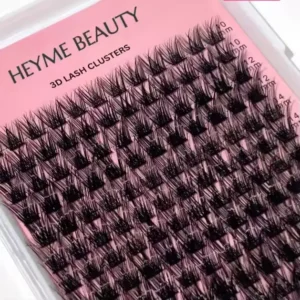
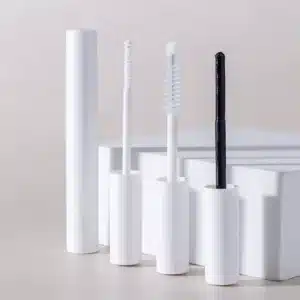
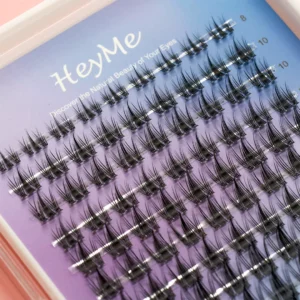
From a business perspective, placement isn’t just a user skill—it’s part of the product experience.
When customers struggle with placement:
- They assume the lashes are low quality
- They experience discomfort
- They’re more likely to return the product
This is where design matters.
Clusters with soft, flexible bands adapt more easily to the lash line, making correct placement intuitive—even for beginners. The result is fewer complaints, better reviews, and stronger repeat purchase rates.
In other words, better placement isn’t just a technique—it’s a competitive advantage.
Conclusion
The difference between frustrating results and flawless ones isn’t talent.
It’s understanding.
Once you know where the lash should sit, how it should approach the lash line, and how much space it needs, the process becomes predictable—and much easier.
And that’s when cluster lashes start to feel less like a challenge…
and more like a tool you can actually rely on.