

If you have been doing eyelash extensions for more than a week, you have probably seen them. Small rings. Sometimes silicone, sometimes crystal, sometimes just sitting there on the lash artist’s finger like a weird piece of jewelry. Beginners often ignore them. Some artists never use them at all and just keep working from a regular glue dot on a jade stone or an aluminum cup.
But here is the truth. That little ring can make or break your speed, your glue efficiency, and even your wrist pain after a six-hour shift.
I run a lash factory. Our brand is called HeyMeBeauty. We make lashes, sure, but we also make these glue rings. And over the years, I have seen artists use them in ways that completely waste their potential. I have also seen artists swear by a $2 silicone ring more than their $50 tweezers.
So let me walk you through everything about glue rings. Not the textbook stuff. The real stuff. Materials, shapes, what actually works, what is just marketing, and how to pick one without overthinking.
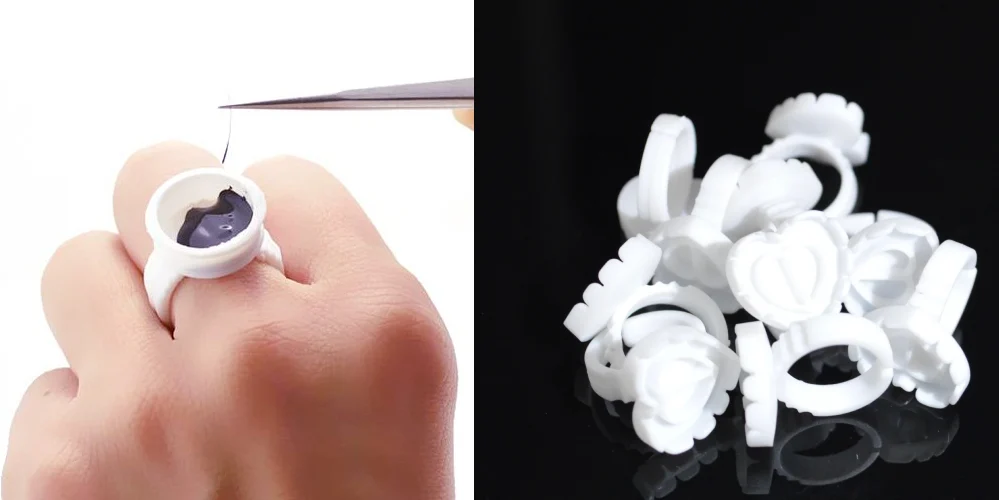
Why Even Bother With a Glue Ring
Most lash artists start with a glue dot on a flat surface. A ceramic tile, a piece of aluminum foil, a glue stone, whatever is around. And that works. For about ten minutes.
Then the glue starts thickening. You get strings. You dip a lash and pull out a long glue spiderweb that sticks to everything except the lash. You waste more time cleaning your tweezers than actually grafting.
That is exactly why glue rings exist.
A glue ring has a narrow, deep groove instead of a flat puddle. Less surface area touching air means slower oxidation. Slower oxidation means your glue stays runny and usable longer. Not forever, but easily fifteen to twenty minutes longer than a flat glue dot. For an artist working fast, that means one less glue change per hour. Multiply that by eight hours. You just saved almost an hour of stopping, cleaning, and reapplying glue.
But that is only if you use the ring correctly. And most people do not.
The Material Question: Silicone, Crystal, Metal, or Stone
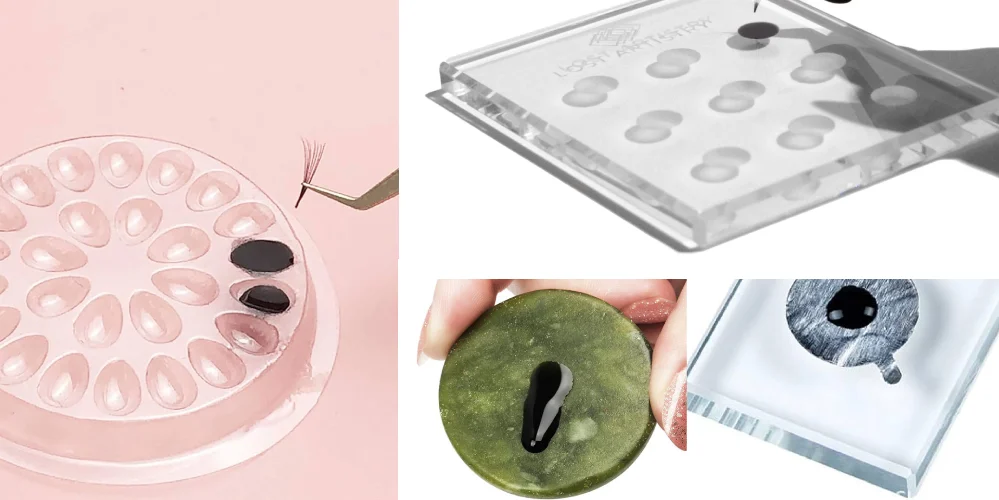
Let us get this out of the way first. The material is not just about looks. It changes how the glue behaves, how long the ring lasts, and how comfortable it is to wear for hours.
Silicone Glue Rings
These are the most common. Soft, flexible, usually worn on the finger. Cheap too. You can get them for under five dollars, sometimes even two dollars if you buy in bulk from a factory like ours.
The good part? They are light. You forget you are wearing one after a few minutes. They do not slip around because silicone grips your skin. And they come in every color you can imagine, which sounds silly until you realize some salons color code their artists so everyone grabs their own ring.
The bad part? Silicone does not last forever. After three to six months of daily use and constant cleaning with alcohol or glue remover, it starts getting hard. Sometimes it cracks. Sometimes the surface gets rough and starts grabbing your lashes instead of letting them glide.
Also, silicone holds heat. Your finger is warm. The ring gets warm. Warm glue dries faster. So ironically, the most popular type of glue ring actually speeds up glue drying compared to a room-temperature surface.
But here is the fix. Do not wear a silicone ring if you use fast-drying glue. Put it on a metal ring stand or just set it on your workstation. The ring itself is fine. The finger heat is the problem.
Crystal and Glass Rings
These look expensive. Clear, shiny, sometimes faceted like a real piece of jewelry. And they feel heavier than silicone.
The big advantage is temperature. Glass and crystal stay cool. They do not absorb body heat the way silicone does. So if you are using a sensitive glue that hates warmth, crystal is actually better.
They are also easier to clean. Alcohol, acetone, glue remover, whatever. Wipe it and it looks brand new. No absorption, no staining, no weird smells building up over time.
The downside? They break. One drop on a tile floor and you are sweeping up tiny sharp pieces. And they are heavier on your finger. Some artists with small hands find them uncomfortable after a few hours.
Also, the really cheap crystal rings have rough edges around the glue channel. Run your fingernail along the inside. If it catches, the ring will shred your lashes when you dip. Quality matters here.
Stainless Steel Rings
These are less common but they have a loyal following. Usually not worn on the finger. Instead, they are flat-bottomed with a magnetic base that sticks to a metal tray.
Steel is great for one reason. It does not care about anything. Alcohol, acetone, glue, heat, cold. Nothing damages it. You could use the same steel ring for years. Just clean it.
But steel is heavy. And cold. And if you are used to silicone, steel will feel completely different. The glue also behaves differently on metal. Sometimes it spreads too thin. Sometimes it beads up. You need to adjust your dipping technique.
These are best for artists who work from a stationary glue well and never wear their glue ring. If you are a finger-wearer, skip steel.
Jade and Agate Stones
Traditional. Old school. Some veteran lash artists refuse to use anything else.
Stone stays naturally cool. It looks professional. And it does not react with any glue chemicals the way some plastics or low-grade silicones might.
But a stone is not really a ring. It is a flat or slightly curved surface with a small dip. It does not have the deep narrow channel that makes a glue ring effective. So you lose the oxidation benefit.
Honestly? Stone is beautiful. It photographs well for Instagram. But for pure performance, a well-designed silicone or crystal ring works better.
Shape and Channel Design: What Actually Matters
This is where most lash artists get lost. They look at a glue ring and see a ring. But the shape of the channel changes everything.
Narrow and Deep
This is the classic design. A groove that is maybe two or three millimeters wide and four or five millimeters deep. You drop a small amount of glue inside, just a drop the size of a grain of rice.
Why narrow and deep? Because the glue sits in a column instead of a puddle. Less surface area. Slower drying. That is the whole point.
This shape works for every type of lash extension. Classic, volume, mega volume. It does not matter.
Wide and Shallow
Some rings have a shallow dish instead of a deep groove. These dry out faster. Much faster. So why do they exist?
Speed. When you are doing mega volume or Russian volume, you need to dip a fan of many lashes at once. A narrow groove forces you to go in straight. A wide shallow dish lets you dip at an angle, which some artists prefer.
But honestly, I think wide shallow rings are a compromise. You lose glue life for a slightly easier dip. Most volume artists who are really good can dip into a narrow groove without trouble. The wide design is more for beginners.
Textured or Grooved Inside
Some silicone rings have tiny lines or bumps inside the glue channel. This is not random. Those textures help break surface tension.
Here is why that matters. When you dip a lash into smooth glue, sometimes the glue clings too much. You pull out a thick glue blob at the base instead of a tiny bead. The texture gives the glue something to release from. It makes the dip cleaner.
For classic lashes, you might not notice. For volume fans, textured channels are a lifesaver. They help the glue spread evenly across all the tips of the fan instead of clumping in the middle.
Double Channel Rings
These have two separate grooves. One for glue. One for something else. Usually glue remover, primer, or a second type of glue if you switch between classic and volume during the same appointment.
Double channels sound useful. In reality, most artists never use the second side. And keeping both sides clean is annoying because glue and remover should never mix, not even dried residue.
Skip double channels unless you have a specific two-glue workflow.
How to Actually Use a Glue Ring Without Wasting Glue
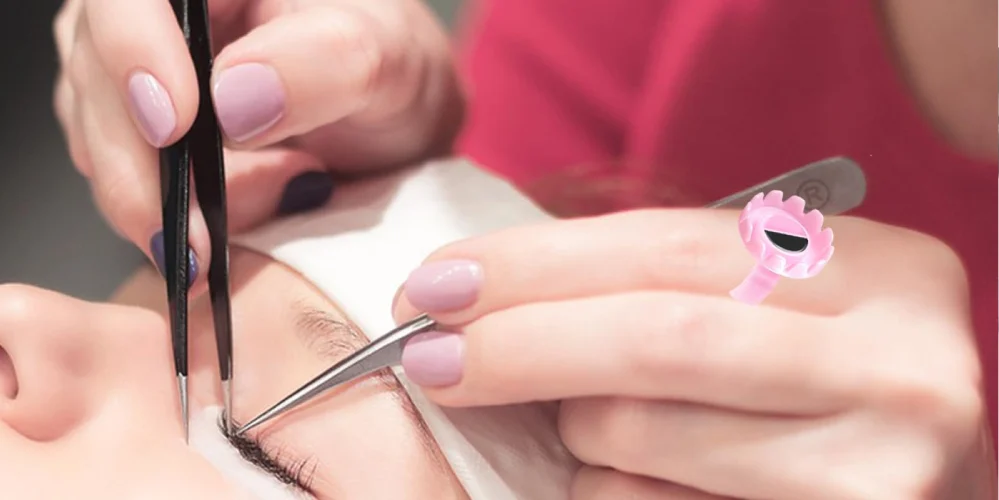
Here is what I see all the time. An artist buys a glue ring, drops a huge glob of glue into it, and then works for an hour from the same glob. By minute twenty, the glue is thick. By minute forty, it is basically rubber. And they blame the glue.
That is not the glue’s fault.
A glue ring extends glue life. It does not make glue immortal.
Here is the real method. Drop a tiny amount of glue into the ring. Smaller than you think. A grain of rice. Maybe half that if you are using fast glue.
Work from that drop. When you feel the glue getting thicker, which should be around fifteen to twenty minutes depending on your humidity and temperature, you do not add more glue on top. You clean the ring completely and start fresh.
Adding fresh glue to old glue ruins both. The old glue has already started curing. The new glue will cure faster because it touches partially cured glue. You end up with a ring full of strings and frustration.
Also, do not over-dip. When you dip a lash, go in straight and come out straight. Do not scrape the side of the ring unless you want to remove excess glue. And if you do want to remove excess, use the textured side if your ring has one, or use a separate surface entirely.
Cleaning and Maintenance
Glue rings get dirty. Not just with glue, but with dust, oil from your fingers, and old adhesive residue. A dirty ring makes your glue misbehave.
For silicone rings, use alcohol wipes or a cotton pad with 99% isopropyl alcohol. Do not soak the ring. Alcohol breaks down silicone over time if you leave it sitting in a pool. Wipe, dry, and it is ready.
For crystal or glass rings, you can use acetone or glue remover. These materials do not care. But rinse with alcohol after because residue from glue remover can contaminate your next glue drop.
For metal rings, anything works. Scrubbing is fine. Metal is tough.
How often? Clean the ring every time you finish a glue drop. So every fifteen to twenty minutes. And deep clean at the end of every workday.
One more thing. If a silicone ring starts feeling sticky or tacky even after cleaning, throw it away. That is the material breaking down. Using it will make your glue stringy.
What to Look For When Buying Glue Rings in Bulk
If you run a salon or a lash training academy, you probably buy glue rings in larger quantities. Here is what matters when you are not just buying one for yourself.
First, consistency. Cheap glue rings from random sellers often have variations in the same batch. Some have deeper channels. Some have rough edges. Some are softer. For a salon with multiple artists, inconsistent rings mean inconsistent results. That is a nightmare for training.
Second, packaging. Individual wrapping matters if you sell rings to clients or give them to students. Bulk bags are fine for back-of-house use. But if a client opens a box and sees rings thrown loosely inside, it feels cheap.
Third, material certification. Food-grade silicone or medical-grade silicone sounds like overkill. But artists care about this now more than ever. If you can say your rings are BPA-free and phthalate-free, say it. That matters to the high-end market.
Fourth, color variety. This sounds shallow. It is not. Salons love color coding. One artist uses pink. Another uses blue. No mixing up rings. No hygiene concerns. If you offer twelve colors instead of three, you win that salon account.
At HeyMeBeauty, we do all of this. But more importantly, we let you customize. Your logo. Your colors. Your packaging. Because a glue ring with your brand name on it is not just a tool. It is a marketing piece that sits on an artist’s finger for eight hours a day.
Common Mistakes That Ruin Glue Rings
I have seen artists do things to glue rings that make me wince. Do not do these.
Storing the ring with glue still inside. Overnight. For days. Old glue hardens and becomes almost impossible to remove without aggressive scraping that damages the channel surface. Clean it immediately after your last client.
Using metal tweezers to scrape glue out of a silicone ring. You will cut the silicone. Once cut, the channel is ruined. Use a wooden stick or a plastic tool.
Dropping a crystal ring on a hard floor. Obvious, but worth saying. Keep a spare.
Sharing rings between artists without cleaning. This is how infections spread. Not just bad for clients, bad for business reputation.
Using the same glue drop for more than twenty minutes. The glue is curing. You are working with partially cured glue. Your retention will suffer. Your clients will come back with falling lashes after a week and blame you.
Do You Even Need a Glue Ring
Let me be honest. A glue ring is not mandatory. There are excellent lash artists who have never used one and never will. They use disposable micro-brushes and tiny glue dots on a jade stone. They change glue every ten minutes. Their retention is great.
But those artists are rare. Most people benefit from the structure a glue ring provides. It forces you to use less glue. It reminds you to change glue regularly. It speeds up your dip.
If you are a beginner, get a silicone ring. Wear it or set it on your table. Learn how small a glue drop should be. Learn when to change it. After a few months, try a crystal ring if you want something that stays cooler.
If you are a salon owner, stock both silicone and crystal. Give your artists options. The cost is tiny compared to the time savings.
If you are a trainer, teach with glue rings. Your students will develop better habits from day one. They will waste less glue. They will frustrate their clients less with slow work.
Final Thoughts
Glue rings are small. Cheap. Easy to ignore. But they sit right at the center of your lash workflow. You dip into one hundreds of times per appointment. That repeated action adds up. A bad ring slows you down a little every single time. A good ring speeds you up.
And if you are buying for a business, the math is simple. A glue ring costs a few dollars. It saves minutes every hour. Minutes turn into appointments. Appointments turn into revenue. Over a year, the right glue ring pays for itself hundreds of times over.
At HeyMeBeauty, we make glue rings because we make everything else too. Lashes. Adhesives. Tweezers. Trays. We test every ring ourselves before we sell it. Not with machines. With our own hands, on real clients, over full workdays.
If you want to try our rings, reach out. We will send you samples. Not because you need convincing. Because once you use a ring that actually works, you will not want to use anything else.
And if you already have a favorite ring, good. Keep using it. But next time you are mid-appointment and your glue is stringing and your wrist hurts and your client is falling asleep under the lamp, take a look at that little ring on your finger. It might be time for an upgrade.