

Choosing the Right Lash Tray
I still remember the first time I walked into a lash supply store, staring at rows of trays with different lengths, colors, and curls. I felt a mix of excitement and intimidation. “Do I pick mixed-length or single-length trays? Which will make my sets look flawless without wasting time?”
If you’ve ever been in my shoes, you know this is a real dilemma. Choosing the right tray can save hours of frustration—or, if you pick the wrong one, make each set a slow, stressful process.
Over the years, I’ve learned that selecting a tray isn’t just about personal preference. It’s about matching your technique, your workflow, and your client’s vision. In this article, I’ll share my experience with mixed vs. single-length lash trays, including their pros, cons, and tips for choosing the perfect tray for your studio.
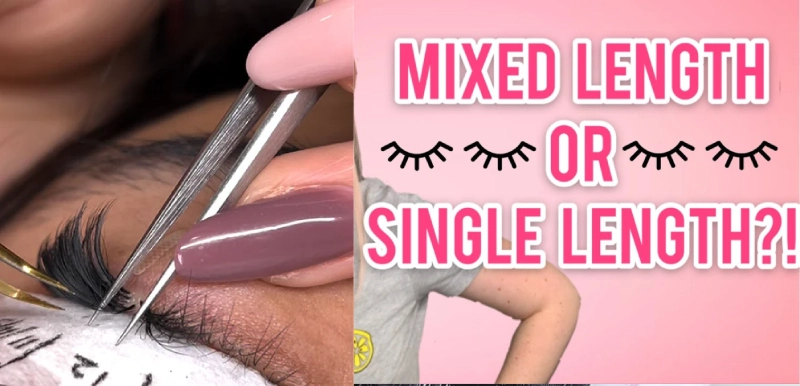
Understanding Lash Tray Basics
Before we dive into the differences, it’s important to understand what makes a lash tray work—or fail. A professional tray isn’t just lashes stuck to tape; it’s carefully engineered.
High-quality trays have:
- Foil or paper backing that prevents warping and maintains curl shape
- Evenly spaced adhesive strips for precise pickup
- Premium fibers, like Korean PBT, that retain curl and maintain a dark, matte finish
- Consistent adhesive thickness to allow easy but secure removal
Knowing these basics will help you understand why certain trays feel effortless, while others can lead to bent bases, split fans, or wasted time during application.
What Are Mixed-Length Lash Trays?
Mixed-length trays are a lifesaver when creating natural, wispy, or textured sets. They contain multiple lash lengths in a single tray, often ranging from 8mm to 15mm.
I still remember the first time I tried a mixed-length tray. I was nervous, afraid I’d grab the wrong length mid-set. But once I mastered mapping the lashes row by row, I realized how much time and creativity these trays could save.
Why I love mixed trays:
- They reduce tray switching during hybrid and volume sets
- Allow me to create subtle layering and depth
- Offer flexibility for creative looks
Challenges:
- Beginners can accidentally mix lengths if they aren’t careful
- Requires pre-planning for symmetry and fan creation
For me, mixed trays are like a toolbox—you need skill to use it well, but the results can be breathtaking.
What Are Single-Length Lash Trays?
Single-length trays are simpler: all lashes are the same length throughout the tray. They’re ideal for classic sets and technicians who prioritize speed and consistency.
When I first started, I relied heavily on single-length trays. They helped me focus on isolation, precision, and speed without worrying about mixing lengths mid-set.
Why single-length trays work well:
- Perfect for 1:1 classic sets
- Easy for beginners to learn placement and tension control
- Quick and efficient for high-volume applications
Challenges:
- Limited flexibility for layering and texture
- May require multiple trays for a full set with varying lengths
In my experience, single-length trays are like a precision tool—they don’t give you creative flexibility, but they make consistent results effortless.
Comparing Mixed vs. Single-Length Trays
Here’s a practical side-by-side view I use in my studio to decide which tray to pick:
| Feature | Mixed-Length Trays | Single-Length Trays |
|---|---|---|
| Length Variety | Multiple lengths per tray | One uniform length |
| Ideal Use | Wispy, textured, hybrid sets | Classic 1:1 sets |
| Skill Level | Intermediate to advanced | Beginner to pro |
| Speed | Slightly slower (mapping required) | Faster for repetitive sets |
| Tray Efficiency | Reduces tray switching | May require multiple trays for variety |
| Creative Options | High | Limited |
Mixed trays feel like a creative playground, while single-length trays feel like a precision instrument. Both are essential, depending on your workflow and the client’s needs.
Choosing Based on Your Technique
Your preferred technique makes a huge difference in tray selection:
- Classic lash artists: single-length trays simplify isolation and speed
- Volume or Russian volume specialists: mixed-length trays allow easy fan creation and depth layering
- Hybrid sets: I often combine trays—using single-length for core lashes and mixed-length for accents
The key is to match the tray to how you work and the look you want to achieve.
Choosing Based on Client Goals
Client preference should also guide your choice:
- Natural enhancement: single-length trays create clean, uniform sets
- Wispy or dramatic styles: mixed-length trays allow layering and texture
- Detailed mapping: mixed trays reduce the need to constantly open new trays
I always ask my clients: “Do you want a soft natural look or something more full and dramatic?” That answer often determines the tray I pull first.
How Tray Quality Affects Your Choice
Tray type isn’t the only factor. High-quality construction can make or break your application.
In my experience, premium trays have:
- Even adhesive coating and strip thickness
- Foil backing for stable, flat placement
- Premium PBT fibers for curl memory and dark intensity
- Peel resistance that’s secure yet easy to lift
Low-quality trays, regardless of being mixed or single-length, often cause bent bases, residue, or distorted curls. Using premium trays like HeymeBeauty ensures consistent results and protects the lash’s structure during pickup.
Tools and Techniques for Each Tray Type
Technique matters as much as the tray itself:
- Mixed trays: pre-plan row order, lift vertically at the base, and handle fans carefully
- Single-length trays: pick up one lash at a time, maintain isolation, lift straight up
- Tweezers: curved or boot tweezers for volume, fine-tipped for classic
- Always inspect base integrity and adhesive before dipping in glue
From my experience, even the best tray can feel difficult without proper tools and technique.
Troubleshooting Common Issues
Even with premium trays, issues arise:
- Mixed trays: uneven fan symmetry, accidental length switching
- Single-length trays: monotone sets may lack texture
- Solutions: map lashes, grip at the bonded base, lift vertically, keep trays flat
Here’s a quick troubleshooting table I keep in my studio:
| Issue | Mixed-Length Tray | Single-Length Tray | Solution |
|---|---|---|---|
| Uneven fan | Length overlap | Not applicable | Map row order carefully, lift at base |
| Curl distortion | Base grip error | Base grip error | Grip 1–2mm above adhesive, lift vertically |
| Adhesive residue | Common | Less common | Inspect base, lightly wipe strip |
| Tray switching | Less frequent | More frequent | Organize multiple trays by length |
Pros and Cons Summary
Here’s a snapshot for quick reference:
| Tray Type | Pros | Cons |
|---|---|---|
| Mixed-Length | Creative layering, fewer tray swaps, textured sets | Requires skill, planning, attention to mapping |
| Single-Length | Consistency, fast application, beginner-friendly | Limited texture, may need multiple trays for variety |
FAQ
Which tray is better for beginners?
Single-length trays simplify isolation, speed up learning, and reduce accidental mixing of lengths. They’re ideal for technicians starting out.
Can I combine mixed and single-length trays?
Yes. Many pros use single-length trays for core lashes and mixed-length for accent layers, balancing precision and creativity.
Do mixed trays last longer than single-length trays?
Tray longevity depends on adhesive quality and storage. Mixed trays save switching time, but both last equally when stored properly.
How should I store trays to prevent adhesive issues?
Keep trays in a cool, dry place away from direct sunlight. Foil-backed trays maintain structure better than paper-backed trays.
5. How do I know if a tray is high quality?
Look for consistent curl, even adhesive coating, foil backing, no residue, and premium fibers (Korean PBT). High-quality trays make application effortless.
Conclusion
In the end, the choice between Mixed vs. Single-Length Lash Trays depends on:
- Your technique and experience
- Client goals and desired look
- Workflow efficiency
- Tray quality and reliability
From my experience, every professional lash kit benefits from both types. Single-length trays provide consistency and speed, while mixed-length trays unlock creativity and texture. When combined with premium trays, proper tools, and correct technique, your lash application becomes effortless, precise, and beautiful every time.