

If you have Asian eyes and you’ve tried lash clusters before, you probably know the feeling.
You carefully apply them. They look decent in the mirror. Then you blink a few times, and something just feels… off.
The inner corner starts lifting within an hour. The outer edge hangs past your actual eye shape. Or the curl is so dramatic that your lashes look like tiny fans trying to fly off your face.
Here’s the thing nobody tells you: most lash clusters aren’t designed for you.
They’re designed for Western eye shapes—longer eye openings, higher creases, and lashes that naturally curl upward. When you take those same clusters and put them on Asian eyes, the mismatch isn’t your fault. It’s the product.
At Heyme Beauty, we manufacture lash clusters for brands all over the world. And over the years, we’ve spent a lot of time studying how different eye shapes—monolids, double eyelids, hooded lids, tapered creases—actually interact with different lash designs.
This guide is what we wish every Asian lash user could read before buying another pair of clusters. Not beauty blogger opinions. Not recycled tips from Western tutorials. Just factory-backed insights from people who actually make this stuff.
What Makes Asian Eyes Different (From a Manufacturing Perspective)
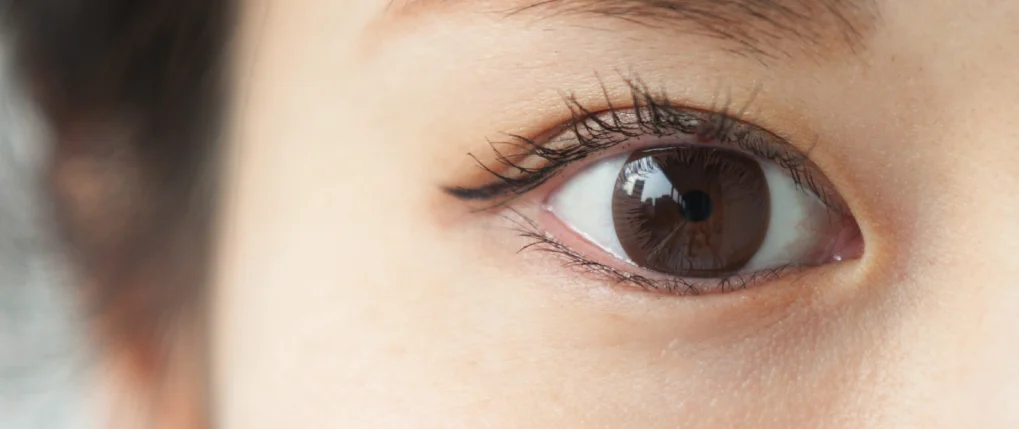
Let me explain this the way we see it at the factory.
When we design lash clusters for a new client, the first thing we ask is: who is this for? Because eye shape isn’t just about whether you have a crease or not. It affects almost everything—how long the lash should be, how curled it needs to be, even where the cluster should sit on your lash line.
Here are the main differences we’ve observed across thousands of orders and customer feedback.
Eye opening width. Asian eyes tend to have a narrower horizontal opening compared to Western eyes. That means a cluster that fits perfectly on someone with a wider eye will overhang on yours. The outer corner sticks out. The inner corner doesn’t reach. It looks like you’re wearing lashes that belong to someone else.
The eyelid crease (or lack of one). Monolids don’t have a natural crease. Double eyelids in Asian eyes often have a lower, shallower crease than Western double eyelids. Hooded lids have extra skin that folds over the base of the lashes. Each of these affects how a lash cluster sits and how visible it is when you look straight ahead.
Eyelash direction. This one surprises a lot of people. Many Asian lashes grow straight downward or forward, not upward. If you take a cluster with a strong curl and stick it on straight lashes, the contrast is obvious. The cluster points up. Your real lashes point down. You get that awkward gap.
The inner corner fold (epicanthic fold). Some Asian eyes have a skin fold that covers the inner corner of the eye. That fold makes it harder to get lash clusters to stay put near the inner corner. The skin moves differently, and the adhesive gets pulled more than it would on eyes without that fold.
None of these are flaws. They’re just features. And good lash design works with them, not against them.
The Three Most Common Problems (And Why They Happen)
Before we talk about solutions, let’s be honest about the problems. We hear these complaints constantly from customers who thought they were doing everything right.
Problem one: the inner corner lifts within hours.
You applied everything carefully. But a few hours later, the inner edge of the cluster is already peeling away from your skin.
From our testing, this usually happens for two reasons. First, the cluster is too straight. Asian eyes often have a more curved lash line near the inner corner. A cluster with a rigid, straight band won’t conform to that curve. Second, the adhesive wasn’t given enough time to cure. But honestly, product design plays a bigger role here than most people admit.
Problem two: the outer corner looks like it’s flying off your face.
This is almost always a length issue. The cluster was designed for a wider eye, so the outer edge extends past your natural lash line. When there’s nothing underneath to support it, that extra length acts like a lever. Every blink pulls on it. Eventually, it lifts or starts pointing in a weird direction.
Problem three: the curl looks fake.
You wanted natural volume. What you got looks like plastic strips glued to your face.
The culprit here is usually a mismatch between the cluster’s curl and your natural lash direction. If your real lashes are relatively straight and you use a high-curvature cluster, the contrast is stark.
The cluster curls up. Your real lashes point straight or down. You can see the line where they separate. That’s the “fake” look nobody wants.
These problems aren’t because you have bad technique. They’re because the product wasn’t designed for your eye shape in the first place.
How to Choose the Right Lash Clusters for Asian Eyes
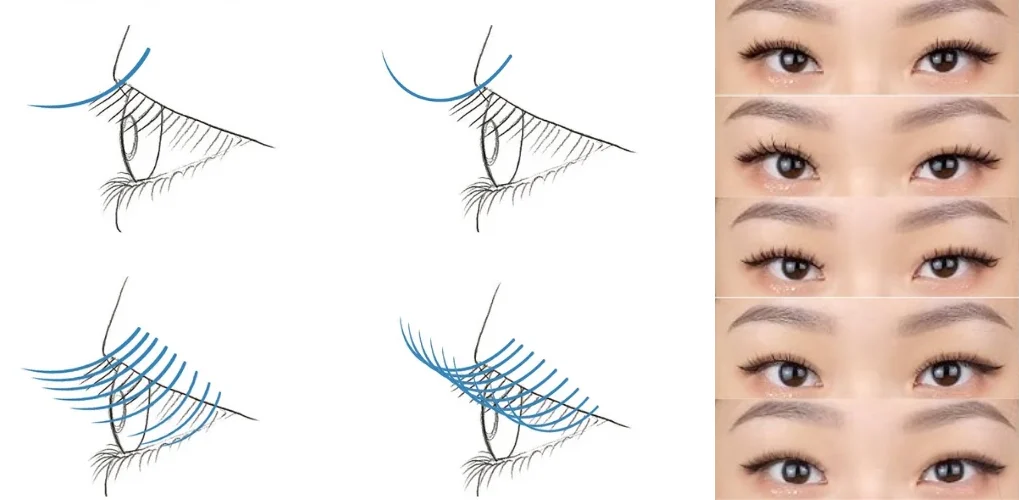
Let me give you a framework that actually works. Not “just try different lengths until something fits.” Real guidelines based on how these products are made.
Length: shorter than you think.
This is the number one mistake we see. People buy 14mm or 16mm clusters because that’s what influencers wear. Then they wonder why it looks overwhelming.
For most Asian eyes, 10mm to 12mm is the sweet spot for everyday wear. That range adds visible length without looking fake or causing the outer corner to lift.
If you want a more dramatic look, 13mm to 14mm can work, but go in knowing that retention might suffer and you’ll need to be more careful with placement.
Here’s a specific guideline from our internal testing:
| Eye type | Natural look | Dramatic look |
|---|---|---|
| Monolid | 10-11mm | 12-13mm |
| Double eyelid | 11-12mm | 13-14mm |
| Hooded | 10-11mm | 12mm |
Anything over 14mm? We rarely recommend it for Asian eyes unless you’re doing a photoshoot or stage makeup.
Curl: C curl is your friend. D curl? Be careful.
In our experience, C curl works well for the majority of Asian eyes. It provides noticeable lift without looking unnatural. The curvature is moderate enough that it blends with most natural lash directions.
CC curl sits between C and D. It’s a good option if you want more lift than C but don’t want the aggressive curl of D.
D curl is tricky. It works best on double eyelids with lashes that already have some natural curl. On monolids or straight lashes, D curl often looks too dramatic and can actually make the cluster lift faster because the tension pulls against your natural lash direction.
If you’re unsure, start with C curl. You can always go curlier later.
Cluster width: narrower is often better.
This is something most guides completely ignore.
Cluster width refers to how many fibers are in each segment. Narrower clusters (about 0.5cm per segment) give you more control over placement. You can position each segment exactly where you want it. Wider clusters (0.7cm or more) are faster to apply but harder to fit on narrower eye openings.
For Asian eyes, we typically recommend starting with narrower clusters. They take slightly longer to apply, but the fit is much more precise. You can avoid the inner corner lift and outer corner overhang that plague wider clusters.
Band type: clear for everyday, black for glam.
Clear bands are softer and more flexible. They blend into your lash line and are less visible if your application isn’t absolutely perfect. For everyday wear, clear is usually the better choice.
Black bands provide more definition. They can make your lash line look fuller and more dramatic. But they’re also more obvious if your application is slightly off.
Save black bands for when you’re doing a full makeup look and have time to place them carefully.
By Eye Shape: What Actually Works

Let me break this down by specific eye types. Find yours.
Monolids (no visible crease).
Your lashes might point straight down or forward. The skin above your lashes is smooth with no fold. This means lash clusters need to sit slightly above your natural lash line to be visible.
What works: C curl, 10-11mm, narrow clusters. Apply them just above your lash line—not directly on it. If you apply too low, your lid skin will push the lashes down when you open your eyes.
If you apply too high, they’ll look disconnected. It takes practice, but once you find the right spot, it’s repeatable.
What doesn’t work: D curl or longer than 13mm. The curl will look unnatural, and the length will cause constant lifting.
Double eyelids (visible crease, often lower than Western creases).
You have more flexibility than monolids, but you still need to be careful. The crease creates a natural fold that can push clusters downward if they’re placed too high.
What works: C curl or CC curl, 11-12mm for everyday, up to 14mm for drama. Standard cluster widths are usually fine, but narrower clusters still give you better control.
The sweet spot for most of our double eyelid customers is 11mm C curl. It’s visible without being overwhelming and stays put through normal daily activities.
Hooded eyes (extra skin folds over the lash line).
This is the trickiest eye shape for lash clusters. The hooded skin pushes down on your lashes, which can cause clusters to tilt downward or lose curl quickly.
What works: C curl, 10-11mm, placed slightly higher than you think you need. The goal is to get the cluster above the hood so it’s visible when your eyes are open. You might also want to focus volume on the outer half of your eye, where the hood is usually less prominent.
What doesn’t work: Long clusters (13mm+) or heavy volume. Both will get weighed down by the hood and look droopy.
Eyes with epicanthic fold (skin covering the inner corner).
Your main challenge is the inner corner. The skin fold creates constant movement that pulls on adhesives.
What works: leaving the innermost 2-3mm of your lash line empty. Don’t try to force a cluster all the way to the inner corner. Start your first cluster slightly farther out, and let the outer clusters carry the length.
We’ve seen this approach reduce inner corner lifting by a lot in our customer feedback. It’s not intuitive—you want full coverage—but sometimes less is more.
Placement Tips That Make a Difference
Product selection is half the battle. Placement is the other half.
For monolids: Place clusters just above your natural lash line, not directly on it. If you look straight into a mirror and see the cluster sitting on top of your lashes, that’s about right. You want the cluster to be visible, not hidden under your lid skin.
For double eyelids: Place clusters directly on your lash line, as close to your natural lashes as possible. Your crease won’t push them down, so you can aim for a more natural, blended look.
For inner corner issues: Don’t force it. If your inner corner consistently lifts, try starting your first cluster about 2-3mm away from the innermost point. The gap won’t be noticeable to anyone else, and your lashes will stay on longer.
For outer corner overhang: This is fixable. If the last cluster extends past your eye, either use a shorter cluster for the outer corner or trim the existing one slightly. We’ll talk more about trimming below.
For cat eye effect: Use longer clusters at the outer corner and shorter ones toward the inner corner. For example: 9mm inner, 10mm middle, 11mm outer. This creates a lifted, elongated look that works well for most Asian eye shapes.
What We Learned From Testing (Real Numbers, Not Guesswork)
At Heyme Beauty, we don’t just design products and hope they work. We test them.
Earlier this year, we ran a small study with 50 Asian women across five eye shape categories. Each participant tried three different curl types (C, CC, and D) and three length ranges (10-11mm, 12-13mm, 14-15mm). They wore each style for three days and reported on comfort, retention, and overall satisfaction.
Here’s what we found.
For monolids, C curl with 10-11mm had the highest satisfaction rate at 84%. D curl with any length dropped to below 40%. The curl was just too aggressive.
For double eyelids, CC curl with 12-13mm performed best, with 78% of participants reporting they’d wear that style again. C curl was close behind at 72%. D curl still lagged, but not as dramatically as with monolids.
For hooded eyes, shorter was consistently better. 10-11mm C curl had a 75% satisfaction rate. Anything over 12mm dropped below 50%.
The takeaway? Start with C curl and shorter lengths. You can always go longer or curlier later. But if you start too dramatic, you might give up on lash clusters entirely—thinking they just don’t work for you. They do. You just need the right specs.
Can You Trim Lash Clusters for Asian Eyes? (And How to Do It Right)
Sometimes, even with the right specs, you need a tiny adjustment.
Maybe the outer corner of a 12mm cluster feels just slightly too long for your eye shape. Or you bought a mixed-length set and want to customize the mapping.
Yes, you can trim lash clusters. But there’s a right way and a wrong way.
The wrong way: Cutting straight into the band. That band is what holds the fibers together. Damage it, and the whole cluster falls apart.
The right way: Trim the tips of the fibers, not the base. Use small, sharp scissors (cuticle scissors work well). Take off tiny amounts—1-2mm at a time—and check the fit before cutting more.
When trimming for Asian eyes, focus on the outer corner. That’s where length issues are most obvious. Trimming the inner corner is riskier because the fibers are shorter there to begin with, and you might cut into the band without realizing it.
And if you’re trimming regularly because every cluster feels too long? That’s a sign you should buy shorter clusters. Trimming is for occasional adjustments, not daily necessity.
When Trimming Isn’t the Answer
Sometimes, no amount of trimming will fix the problem.
If the curl is wrong, trimming won’t change the curl. If the band is too stiff, trimming won’t make it more flexible. If the cluster width is too wide for your eye opening, trimming won’t narrow it meaningfully.
In those cases, the real answer is different product specifications. That’s why we offer so many variations at Heyme Beauty. Different lengths, different curls, different band types, different cluster widths. The right product shouldn’t need major modifications out of the box.
If you’re a business owner reading this and you’re tired of customers complaining about fit issues, here’s what we’ve learned: offer multiple options. One length doesn’t fit all eye shapes. One curl doesn’t work for every customer. The brands that succeed are the ones that give their customers real choices, not just one “standard” option that actually only fits one type of eye.
FAQ
Can I wear lash clusters if I have monolids?
Yes. Absolutely. We have hundreds of customers with monolids who wear clusters daily. The key is C curl, 10-11mm, and placement just above your lash line. Get those three things right, and you’re good.
What curl should I start with if I’ve never worn clusters before?
C curl. It’s the most forgiving across different eye shapes. Once you’re comfortable with C curl, you can experiment with CC or D if you want more drama.
How long should my lash clusters be for everyday wear?
10-12mm. That range adds noticeable length without looking fake or causing retention issues. Save the 13-14mm for special occasions.
Why do my clusters keep lifting at the inner corner?
Two likely reasons. Either the cluster is too wide for your eye opening, or you’re applying it too close to the inner corner. Try narrower clusters or leave a small gap at the innermost point.
Do you offer custom lengths for Asian eye shapes?
We do. At Heyme Beauty, we manufacture lash clusters in lengths from 8mm to 25mm. If you need something specific—whether for personal use or for a brand you’re building—we can make it. That’s what we do.
Can I wear lash clusters if my natural lashes are straight or point down?
Yes. C curl is designed to work with straight lashes. The key is making sure the cluster sits securely against your lash line so there’s no visible gap. If your natural lashes point straight down, you might need to curl them lightly before applying clusters.
Conclusion
Most lash clusters aren’t designed for Asian eyes. That doesn’t mean they can’t work for you—it just means you need to be more selective.
Stick with C curl. Start with shorter lengths (10-12mm). Pay attention to cluster width. Adjust placement based on your eye shape—monolid, double eyelid, hooded, or epicanthic fold.
At Heyme Beauty, we manufacture lash clusters that work for real people. Not sure where to start? Tell us your eye shape and what look you want. Business owners: we offer private label clusters in custom lengths and curls. Free samples available.
Beautiful lashes aren’t about trends. They’re about what fits you.