

If you are starting or scaling a lash brand, you will hear the words manufacturer, vendor, supplier, and wholesaler used almost interchangeably. That is one of the reasons so many buyers get confused in the early sourcing stage. Two companies may both sell lash clusters, both promise custom packaging, and both say they can help you build a brand. On the surface, they can look similar. In practice, they are not the same kind of business.
The difference matters because it affects almost every part of your order: price, lead time, product consistency, customization options, problem solving, and how much control you really have over your supply chain.
A lash cluster manufacturer is the company that actually produces the product or directly manages the production process at factory level. A lash vendor may sell lash clusters without owning or controlling the factory. Some vendors work with one factory. Others source from several. Some offer excellent service. Others operate mostly as intermediaries.
Neither model is automatically wrong. The better choice depends on what stage your business is in and what kind of control you need. But if you are building a long-term private label lash brand, the difference between working with a vendor and working with a manufacturer becomes more important over time.
The Short Answer
A lash cluster manufacturer makes the product or manages production directly. A lash vendor sells the product and may source it from one or more factories.
That sounds simple, but the business impact is significant. A manufacturer is usually stronger when you need custom styles, stable quality, packaging development, and long-term brand support. A vendor may still be useful if you are testing the market, ordering very small quantities, or looking for convenience rather than production control.
The key question is not which label sounds better. The real question is who controls the product, the quality standard, and the outcome when something needs to change.
What Is a Lash Cluster Manufacturer?

A lash cluster manufacturer is involved in the actual production side of the business. That usually means the company has its own factory, its own production team, or direct factory-level management over the product being made.
In the lash cluster category, that includes work such as material selection, curl and length setup, band design, production planning, quality inspection, packaging coordination, and bulk order management. A real manufacturer can usually discuss product details in a much deeper way because it is closer to the source of the work.
For a buyer, this matters because manufacturing control affects consistency. If you want the same curl, thickness, taper, softness, band shape, tray layout, and packaging result across repeated orders, you need someone who can manage production directly rather than just pass a request along.
Manufacturers are also usually better positioned for private label development. If you want to build a custom lash cluster line instead of buying standard ready-made stock, factory-level control becomes a major advantage.
What Is a Lash Vendor?
A lash vendor is a seller or sourcing party that offers lash products to buyers. Sometimes the vendor also acts as a trading company. Sometimes it is a brand distributor. Sometimes it is an online seller who purchases from factories and resells under a broader service model.
A vendor may not be producing anything directly. Instead, the vendor may be placing orders with a factory, collecting products from one or more suppliers, and selling them to clients under its own business name.
That does not automatically make vendors unreliable. Some are well organized, responsive, and helpful, especially for buyers who need flexible mixed orders or who are still learning the category. A good vendor can simplify sourcing in the early stage.
The limitation is that vendors usually have less direct control over production. If there is a problem with quality, packaging, lead time, or consistency, the buyer may be one more step removed from the source. For very small orders, that may not matter much. For repeat private label business, it often matters a lot.
The Real Difference: Control, Cost, and Customization
The easiest way to understand the difference is to stop thinking in titles and start thinking in control.
A manufacturer controls more of the production process. A vendor controls more of the transaction.
That affects cost first. In many cases, factory-direct pricing is more competitive because there is less trading margin added between production and buyer. This becomes more noticeable as order volume grows.
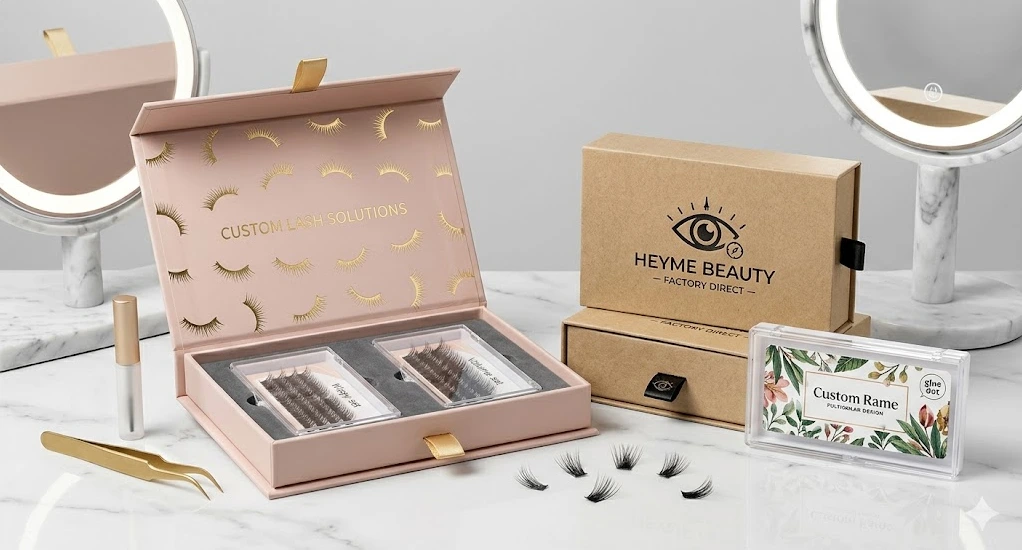
It also affects customization. A manufacturer is usually in a better position to discuss specific lash cluster features, custom tray design, packaging structures, insert cards, logo printing, barcode labeling, and production feasibility. A vendor may offer custom service too, but often through a factory the buyer never sees.
Lead time is another area where the difference shows up. A manufacturer usually has a clearer view of scheduling, material status, and production capacity. A vendor may be able to quote fast, but if the factory situation changes, that visibility can become weaker.
Quality consistency is where many growing brands eventually notice the biggest gap. The first order may look fine whether it comes through a manufacturer or a vendor. The third, fifth, or tenth order is where process control starts to matter.
Why This Matters More for Lash Clusters Than People Expect
Lash clusters are not as simple as they look. Buyers often focus on visible features like length and style, but repeatability depends on much more than that.
Small changes in fiber feel, taper, curl hold, cluster shape, band thickness, tray placement, and adhesive handling can change how the final product performs for the end customer. A lash cluster brand that wants stable reviews and repeat orders cannot rely only on a product photo. It needs supply consistency.
That is why the manufacturer-vendor difference becomes more important in this category. Lash clusters are style-sensitive, packaging-sensitive, and experience-sensitive. If your brand depends on a certain look and wear experience, you need a supply partner who can maintain those standards, not just a seller who can source “something similar.”
When It Makes Sense to Work With a Manufacturer
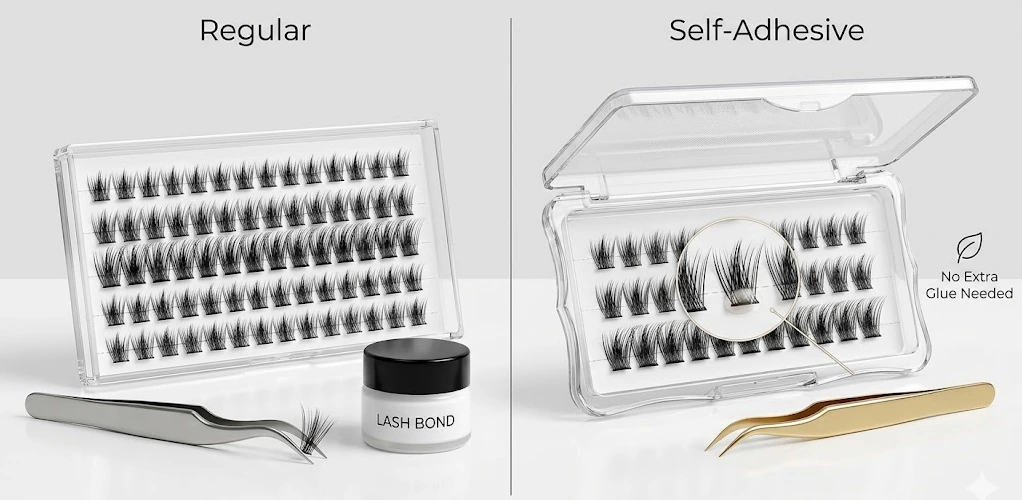
Working directly with a lash cluster manufacturer usually makes more sense when your brand has moved beyond the testing stage.
If you are building a private label line, want to control your margins more carefully, or need repeated production under the same standard, factory-level support becomes more valuable. The same is true if you want custom packaging, specific lash mapping, original style development, or more detailed product adjustments.
Manufacturers are also usually the better option when your business needs to scale. Once order quantities increase, the cost of inconsistency becomes higher than the convenience of using an intermediary. At that point, production communication, quality control, and lead time planning all become strategic rather than optional.
Brands that want to develop long-term product identity rather than just resell available stock usually benefit from moving closer to the factory side.
When a Vendor May Still Be Useful
A vendor can still be the right choice in some situations.
If you are placing very small test orders, trying multiple categories at once, or simply want a faster and more flexible buying process at the beginning, a vendor may be convenient. Some new buyers are not yet ready to manage packaging details, MOQ planning, or product development questions. In that stage, a good vendor may lower the learning curve.
Vendors can also be useful when you want a mixed catalog rather than one focused product line. If your order includes lashes, tools, adhesives, accessories, and packaging from multiple sources, a vendor may help consolidate that process.
The tradeoff is that convenience often comes with less direct production control. For a starter order, that may be acceptable. For long-term brand building, it is usually less ideal.
How to Tell Whether You Are Really Talking to a Manufacturer
This is where many buyers make mistakes. A company may call itself a manufacturer on its website, but that does not always tell you how much factory control it actually has.
A real lash cluster manufacturer should be able to answer production-related questions clearly. It should be able to discuss lash materials, curl options, style structures, packaging setup, MOQ logic, production timing, and quality inspection standards without sounding vague.
You should also pay attention to how the conversation goes when you ask for something slightly specific. If you request a packaging change, a tray adjustment, a custom style variation, or a logo process update, does the answer sound direct and practical? Or does it sound like the company is waiting to ask someone else first?
Another good sign is whether the company can explain its process, not just its product. A real factory-oriented partner usually has a clearer view of sampling, production, QC, and bulk order flow.
Why Brands Often Move From Vendor to Manufacturer
Many small brands start with vendors and later move closer to manufacturers. That shift happens for practical reasons.
At first, convenience matters most. Later, margin matters more. Then consistency matters more. Then packaging control matters more. Then speed of problem solving matters more.
As the business grows, the cost of not controlling supply becomes more visible. A brand may realize that it is paying extra margin without getting better quality. Or that product details change slightly from batch to batch. Or that custom packaging requests take too long because communication passes through too many layers.
At that stage, direct manufacturing support becomes less of a luxury and more of a business requirement.
How Heyme Beauty Supports Lash Cluster Brands
Heyme Beauty operates as a false eyelash factory with a strong focus on private label production, custom packaging, and long-term brand support. For buyers in the lash cluster category, the value of working with a factory is not only lower pricing at scale. It is the ability to align product, packaging, and quality expectations from the start.
For growing brands, that means more control over lash cluster styles, packaging presentation, repeat order consistency, and product development decisions. It also makes communication easier when details need to be adjusted, whether the issue is tray format, branding elements, or production planning.
The more a brand wants to look and feel distinct in the market, the more useful direct factory collaboration becomes.
Conclusion
The difference between a lash cluster manufacturer and a lash vendor is not just a matter of wording. It changes how much control you have over product quality, customization, pricing, lead time, and long-term brand development.
A vendor may still be useful when the order is small, the business is new, or convenience matters most. A manufacturer becomes the stronger choice when the goal is to build a stable private label brand with repeatable quality and better production control.
For buyers who want to grow beyond simple resale and develop a more reliable lash cluster supply chain, understanding this difference early can save time, cost, and frustration later.
FAQ
What is the difference between a lash cluster manufacturer and a lash vendor?
A lash cluster manufacturer is directly involved in making the product or managing production at factory level. A lash vendor sells lash clusters but may source them from one or more factories without controlling production directly.
Is it better to buy from a lash cluster manufacturer or a vendor?
It depends on your business stage. A vendor may be useful for small test orders or mixed sourcing. A manufacturer is usually better for private label growth, stable quality, custom packaging, and long-term supply control.
Do lash vendors usually have higher prices than manufacturers?
In many cases, yes. Vendors often include an additional trading or sourcing margin. That difference becomes more visible as order volume increases.
Can a lash vendor offer private label service too?
Yes, some vendors can offer private label service, but they may still rely on a factory behind the scenes. The key issue is whether they can control production quality, packaging consistency, and lead time as directly as a manufacturer can.
How do I know if a company is a real lash cluster manufacturer?
Ask production-level questions. A real manufacturer should be able to discuss MOQ, packaging options, lash style details, sampling process, quality control, and bulk production timing clearly and directly.
Why do growing lash brands prefer manufacturers?
As brands scale, they usually need better consistency, stronger packaging control, lower cost at volume, and more direct communication about product development. Those needs are often easier to meet through a manufacturer than through a vendor.