

Whether you’re building a new lash brand or scaling an established one, choosing the right lash manufacturer can make or break your business. A single inconsistent batch can undo months of branding, marketing, and customer trust. Many founders learn this the hard way—what looks flawless on Instagram doesn’t always translate to safety, comfort, or repeatable quality in real-world use.
We’ve seen firsthand how fast brands grow when their products are reliable, consistent, and safe. At HEYME, we produce millions of pairs of lashes every month using tightly controlled processes, documented specifications, and traceable quality systems. This article shares the same science-backed, field-tested framework we use internally to avoid costly “sample-to-bulk surprises.”
This guide is written exactly how we would explain it to a new brand founder sitting across the table from us.
Quick Answer: How to Choose the Right Lash Manufacturer
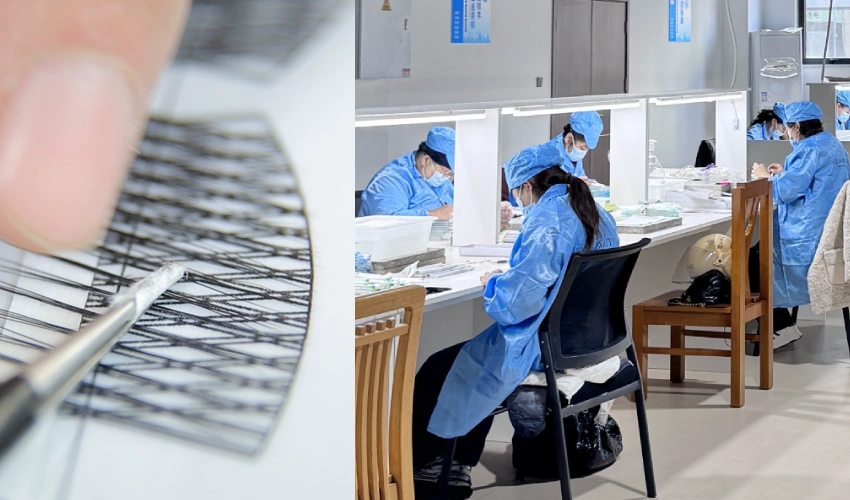
When selecting a lash manufacturer—whether for OEM, private label, or bulk supply—look for evidence, not promises.
A reliable manufacturer should provide:
- Repeatable lash specifications (curl, diameter, taper, length tolerance)
- Documented quality systems and batch traceability
- Safety and compliance documentation (SDS, COA, stability data)
The best manufacturers don’t rely on marketing language. They rely on process control, records, and consistency over time.
Why Manufacturer Choice Is a Safety Decision, Not a Price Decision
Lash products may seem small, but they sit dangerously close to one of the most sensitive areas of the body: the eyes. Poor-quality lashes or adhesives can lead to irritation, allergic reactions, lid swelling, or even corneal damage.
According to the American Academy of Ophthalmology, eyelash extensions and adhesives are not directly regulated by the FDA, yet adverse reactions are increasingly reported. This places responsibility squarely on brands to self-regulate through proper supplier selection.
Choosing a manufacturer is not about finding the lowest price—it’s about building a safety system your customers can trust.
Step 1: Start With Your Real Product Specification (Not Just “0.07 D Curl”)
One of the most common mistakes brands make is defining their product using vague industry shorthand.
A specification like “0.07 D curl” is not enough.
You must define:
- Who the product is for
- How long it will be worn
- What problems it must solve
For example:
- Salon clients need curl retention, stability, and uniformity
- DIY users prioritize comfort, flexibility, and easy pickup
Translate aesthetic goals into measurable parameters:
- Diameter tolerance
- Curl angle range
- Length mix variance
- Acceptable defect limits
Clear specs lead to repeatable results.
Step 2: Evaluate Material Quality (Because “Premium” Is Not a Material)
Most modern lashes are made from engineered synthetic polymers. The difference between good and bad lashes is not the label, but process control.
Key material factors to evaluate:
- Fiber consistency (diameter, taper, curl uniformity)
- Surface feel (smooth vs scratchy at the lash line)
- Elastic recovery (spring-back after bending)
- Long-term curl retention
Simple Three-Touch Test
- Lightly pinch the base – does it collapse or recover?
- Fan repeatedly – does it deform?
- Compare multiple trays – are they identical?
Inconsistency here will only get worse in bulk production.
Step 3: Adhesives—Where Science-Based Quality Matters Most
If your manufacturer supplies adhesives, documentation is non-negotiable.
Cyanoacrylate-based adhesives may contain irritants such as formaldehyde byproducts. Without proper formulation control, risks increase significantly.
Always request:
- SDS (Safety Data Sheet)
- COA (Certificate of Analysis)
- Ingredient disclosure
- Stability and storage guidelines
Any supplier unwilling to provide these documents should be considered high risk.
Step 4: Manufacturing Systems, GMP, and Process Control
Certifications matter—but only if they’re actually followed.
Look for manufacturers operating under ISO 22716 (Cosmetics GMP) or equivalent systems, and verify how they apply them in practice.
Ask about:
- Batch-level production records
- Defined QC checkpoints
- Defect categorization and rejection thresholds
- Storage and handling procedures
A factory that “has a certificate” but can’t explain its daily QC process is a liability.
Step 5: Microbiological Safety for Eye-Area Products
Lash products are used near the ocular surface, making microbiological control essential.
You should ask:
- How contamination is prevented during production
- Whether microbiological testing is performed (where applicable)
- How tools, trays, and packaging are sanitized
It’s not about zero risk—it’s about having documented preventive systems.
Step 6: The Sample-to-Bulk Gap—How Brands Get Burned
One perfect sample means nothing if the bulk order doesn’t match.
To protect yourself:
- Request two sample rounds from different production dates
- Ensure batch numbers appear on all samples
- Create a golden sample binder with photos and measurements
This dramatically reduces the risk of inconsistency at scale.
Step 7: Compliance, Traceability, and Ethical Responsibility
Regulatory expectations are rising globally, especially under frameworks like MoCRA in the U.S.
A qualified manufacturer should:
- Respond to documentation requests within 48 hours
- Track adverse events and complaints
- Maintain reorder traceability
Ethics and sustainability also matter. Ask for:
- Cruelty-free verification
- Sustainability certifications
- Raw material sourcing transparency
Private Label vs OEM: Know What You’re Really Buying
| Category | Private Label | OEM |
|---|---|---|
| Product ownership | Shared | Brand-owned |
| Custom specs | Limited | Fully defined |
| Long-term consistency | Medium | High |
| Risk of imitation | High | Low |
| Best for | Testing | Scaling brands |
Serious brands eventually move to OEM with locked specifications.
Packaging and Transportation: The Hidden Quality Killers
Even perfect lashes can fail due to poor packaging or logistics.
Common risks include:
- Humidity exposure
- Tray deformation
- Static buildup
- Carton compression
Always review packaging design and shipping conditions—especially for international orders.
Build Your Own Incoming Quality Control (IQC)
Even the best manufacturer is not a substitute for your own checks.
Basic IQC should include:
- Random carton inspection
- Comparison to golden samples
- Curl, length, and base alignment checks
- Photo documentation of defects
This protects your brand and strengthens supplier accountability.
Common Mistakes Brands Make
- Choosing based on aesthetics alone
- Trusting certifications without verification
- Skipping second-round sampling
- Failing to lock specifications
- Ignoring adhesive documentation
Avoiding even one of these mistakes can save months of damage control.
FAQs
How can I tell if a lash manufacturer is truly consistent?
Ask for multiple samples from different production dates, request batch records, and compare them to a golden sample. True consistency shows up over time, not in a single perfect sample.
What documents should a professional lash manufacturer provide?
A reliable manufacturer should provide SDS, COA, batch traceability records, quality control standards, and compliance documentation upon request, especially for adhesives and eye-area products.
Is private label or OEM better for building a long-term lash brand?
OEM manufacturing is better for long-term growth because it allows you to lock specifications, protect product uniqueness, and maintain consistent quality as your brand scales.
Why are two rounds of samples necessary before placing bulk orders?
Two sample rounds help identify production variability across different manufacturing windows, reducing the risk of inconsistencies between approved samples and final bulk shipments.
How important is GMP or ISO certification for lash manufacturers?
Certifications matter because they indicate structured quality systems, but brands should also verify how those systems are applied daily through documented processes and batch-level controls.
Final Takeaway
Successful lash brands don’t win because their lashes are prettier.
They win because their products are predictable, safe, and consistently repeatable.
Choosing the right lash manufacturer is not a sourcing task.
It’s a risk decision, a safety decision, and a brand trust decision.
Treat it that way—and your brand will scale with confidence.