

In the eyelash business, people use the words manufacturer, vendor, supplier, and wholesaler very loosely.
That creates confusion early, especially for newer buyers. A company may describe itself as a manufacturer because it sells factory-made lashes. Another may call itself a vendor but still offer private label service. On the surface, both can look like possible sourcing partners. They may both send catalogs, both offer samples, and both say they support brand building.
The difference becomes clearer once the business moves beyond the first order.
An eyelash extension manufacturer is connected directly to production. A vendor may sell the same category of product without controlling the production process in the same way. For a buyer placing a small test order, that difference may not feel urgent. For a brand trying to build stable private label supply, it becomes much more important.
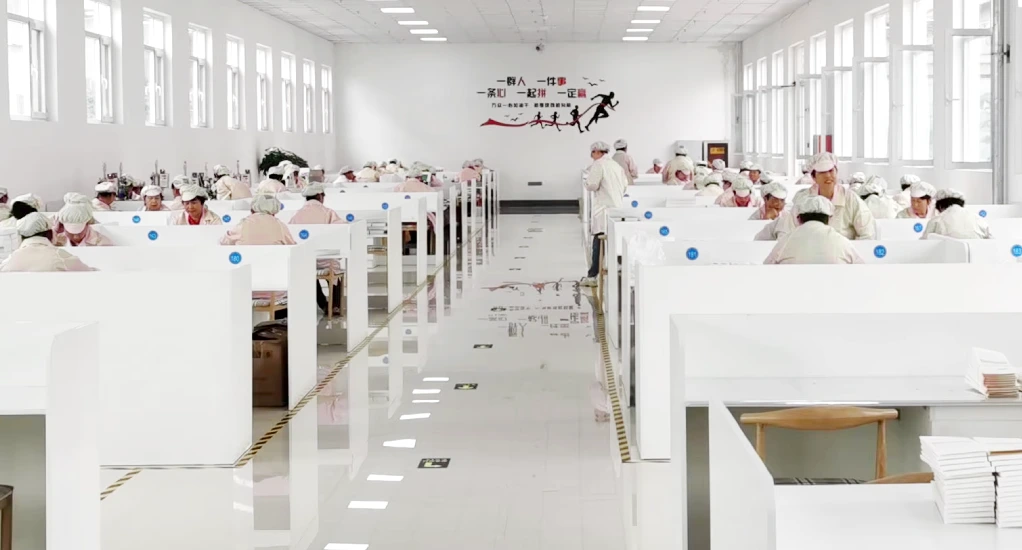
A Manufacturer and a Vendor Do Not Play the Same Role
A manufacturer is part of the production side. That means the company is responsible for making the product or managing production closely at factory level. It is involved in material control, process execution, product consistency, packaging coordination, and repeat order handling in a direct way.
A vendor works more on the selling side. In many cases, the vendor sources product from one or more factories and resells it to the buyer. Some vendors are organized and professional, and some are very useful in the early stage. But the structure is different. The buyer is one step further away from the source of production.
That single step may not matter when the order is simple. It matters much more when something changes, such as packaging revisions, style adjustments, quality concerns, or repeat order consistency.
The Difference Usually Shows Up in Control
The easiest way to understand the difference is to look at control.
A manufacturer has more direct control over what is being made, how it is being made, and how closely a repeated order can follow the original standard. A vendor may still coordinate all of those things, but often by relaying information between buyer and factory rather than controlling the work directly.
This affects more than communication speed. It affects how clearly the product can be defined, how reliably a change can be made, and how quickly a problem can be traced when something goes wrong. In categories like eyelash extensions, where small details influence user experience, that production distance matters.
Recommended products
-
Camilla Lashes | Lash Extensions
-
Easy Fan Lashes | Lash Extensions
-
Elipse Flat Lashes | Lash Extensions
-
Individual Lashes Natural Lash Extensions
Price Is Only Part of the Story
Many buyers assume the manufacturer-versus-vendor question is mainly about price. Cost does matter, and factory-direct relationships often create better pricing structure over time, especially when order volume grows.
Still, price is not the most important difference.
What matters more is what the buyer receives in exchange for that cost. A vendor may provide convenience, mixed sourcing, and easier access for smaller or less experienced buyers. A manufacturer may provide stronger consistency, clearer customization support, and a more stable long-term production relationship.
If the buyer only compares quotations, the decision stays shallow. If the buyer compares control, repeatability, and supply-chain stability, the difference becomes much more useful.
Private Label Changes the Conversation
The more private label matters, the more the manufacturer relationship usually gains importance.
That is because private label depends on more than buying finished stock. Once a brand wants specific packaging, tray presentation, logo placement, product feel, and repeat consistency, the production side becomes central. The buyer is no longer just selecting lashes from a catalog. The buyer is trying to create a product that can keep the same identity over time.
A vendor may still help with private label, especially at smaller scale. But if the vendor is passing those requests to a separate factory, the buyer should understand that the success of the project still depends on how well that factory relationship is managed in the background.
In other words, private label can be offered by both, but it is not controlled equally by both.
Vendors Can Still Be Useful
This is worth saying clearly, because not every buyer needs to start with a manufacturer.
A good vendor can make sense when the order is small, when the buyer is still testing the category, or when the business needs mixed sourcing across several beauty products. Some buyers value simplicity at the beginning more than direct factory control. In that stage, a vendor may lower the entry barrier and reduce operational complexity.
The problem appears when the buyer assumes that convenience and production control are the same thing. They are not. A vendor can be the right short-term choice and still be the wrong long-term structure for a growing brand.
Why Brands Often Move From Vendor to Manufacturer
This is a very common pattern.
A new brand often begins with a vendor because it is easier. The order quantity is smaller, the questions are broader, and the main goal is to launch. Once the brand starts selling, the priorities change. Margin matters more. Packaging becomes more refined. Repeat quality becomes more visible. Customer feedback becomes more specific. At that point, the brand begins caring much more about production consistency and direct communication.
That is when many brands move closer to manufacturers.
It is not necessarily because the vendor failed. Often it is simply because the business outgrew the structure. What worked at the test stage no longer supports the next level of control.
How to Tell Whether You Are Really Talking to a Manufacturer
This is one of the most practical questions a buyer can ask.
A real manufacturer usually speaks comfortably about production details. That does not mean using complicated technical language. It means being able to answer clearly when the buyer asks about sample process, repeat order consistency, packaging options, MOQ logic, product specification changes, and timeline expectations.
If the discussion stays vague whenever it touches actual production, that is a sign worth noticing.
A manufacturer also tends to think in terms of process. The answers usually connect product, packaging, and production flow together. A vendor may still know the category well, but the discussion can feel more transactional and less production-driven.
The difference is rarely in one sentence. It shows up across the whole conversation.
Case Analysis: A Brand That Outgrew Vendor-Based Sourcing
One brand we followed began with a vendor because the early stage demanded speed and flexibility. The approach worked well enough at first. Samples were easy to arrange, quantities were manageable, and the business launched without much difficulty.
The trouble started as the brand matured.
Once repeat orders increased, the brand needed stronger packaging consistency and more precise control over the product standard. Small differences between batches became harder to ignore. Questions took longer to resolve because production details had to move through an extra layer. The business was no longer trying to “find lashes.” It was trying to build a repeatable branded product.
Eventually, the brand shifted toward direct factory cooperation. The move did not solve every challenge instantly, but it created a clearer structure for quality control, packaging refinement, and long-term order planning.
That case reflects something we see often. The right supply model at the beginning is not always the right supply model for growth.
How We See the Difference From the Factory Side
From a manufacturer’s point of view, the biggest difference is responsibility.
When the factory is directly involved, there is less ambiguity about where the product standard lives. Product discussion, packaging planning, sample confirmation, and repeat production all stay closer to the same source. That does not make every project easy, but it usually makes the process clearer.
At Heyme Beauty, the buyers who benefit most from direct factory cooperation are the ones thinking beyond the first order. They want stable private label structure, better visibility into the product process, and fewer layers between the brand and the actual production work.
That is where the manufacturer role becomes more valuable than the vendor role.
Conclusion
An eyelash extension manufacturer and a vendor can both help a brand source products, but they do not bring the same kind of control to the relationship.
A vendor may be useful for convenience, smaller orders, or early-stage testing. A manufacturer becomes more important when private label, repeat quality, packaging consistency, and long-term supply planning start to matter more.
For brands that want to build stable product identity rather than simply buy available stock, understanding this difference early can save a great deal of time and frustration later.
FAQ
What is the difference between an eyelash extension manufacturer and a vendor?
A manufacturer is directly involved in production or factory-level management. A vendor sells the product and may source it from one or more factories without controlling production in the same direct way.
Is it better to buy from a manufacturer or a vendor?
It depends on the stage of the business. Vendors may be useful for early testing or small mixed orders. Manufacturers are usually better for private label, repeat quality, and long-term supply control.
Can a vendor still offer private label eyelash extensions?
Yes. Some vendors offer private label service, but they may still rely on a separate factory behind the scenes. The key question is how much direct control they have over production and consistency.
Why do growing lash brands move from vendors to manufacturers?
As brands scale, they usually need better margins, more stable product quality, clearer packaging control, and stronger repeat-order consistency. Those needs are often easier to support through direct factory relationships.
How can I tell if a company is a real eyelash extension manufacturer?
Ask about production process, sample handling, repeat consistency, MOQ logic, packaging coordination, and product specification control. A real manufacturer should be able to discuss those areas clearly and directly.