

For years, the beauty market treated mascara as a one-size-fits-all category. Black was the default. Brown was an afterthought — something for blondes or redheads, not for women with naturally dark lashes.
That assumption is breaking down.
In 2026, the rise of “quiet luxury” and natural makeup aesthetics has pushed brown mascara into a new position. More consumers are asking for it. More brands are adding it to their core lineup. And the specific use case — brown mascara on black natural lashes — is getting attention from makeup artists, beauty editors, and product developers alike.
If you manufacture or distribute mascara, here is what you need to know about this shift. Not as a consumer. As a brand owner or buyer who needs to decide whether brown mascara deserves a spot in your product portfolio.
What Actually Happens When Brown Mascara Goes on Black Lashes?
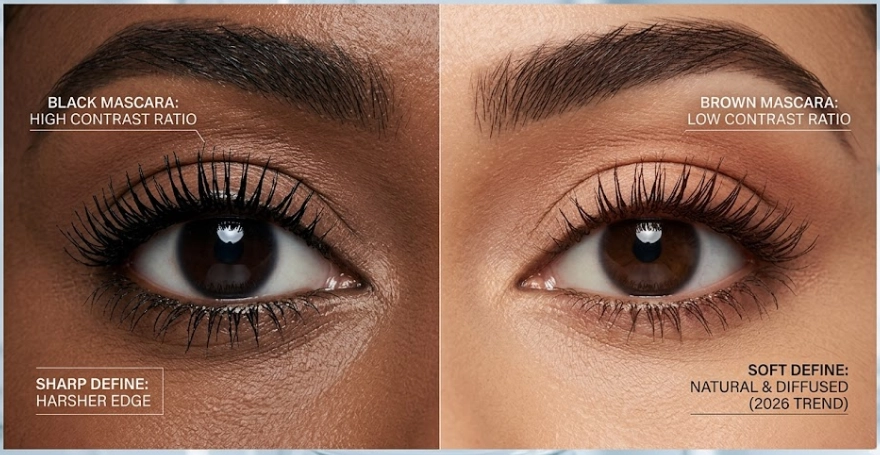
Let us start with the most common concern. Many buyers assume that brown mascara will not show up on naturally dark or black lashes. They imagine a washed-out, invisible result that frustrates customers.
That is not how it works.
Brown mascara does not turn black lashes brown. It does not compete with the natural pigment. Instead, it changes how the eye area is perceived by the human eye.
Here is the technical explanation. Black mascara creates high contrast between the lash line and the skin. That contrast frames the eye sharply. It adds definition, yes. But for many consumers, especially those over 30 or those with fair skin, that sharpness reads as harsh. It emphasizes fine lines. It makes under-eye circles more noticeable.
Brown mascara does the opposite. It adds length and volume, but with a lower contrast ratio. Under indoor lighting or artificial light, the lashes still read as dark. The brown pigment is subtle. Under natural sunlight, a warm undertone becomes visible — not obvious, not dramatic, but present.
The result is a lash line that looks defined but not “done.” That distinction matters. Consumers who want the no-makeup makeup look have been saying for years that black mascara breaks the illusion. Brown mascara keeps the illusion intact.
From a product development perspective, this means brown mascara is not a replacement for black. It is a different tool for a different customer need.
Three Market Drivers Behind the Shift
The growing demand for brown mascara on black lashes is not random. Three specific factors are driving it in 2026.
Driver one: The natural makeup movement is not slowing down.
Five years ago, “clean girl” makeup was a niche trend. Today, it is a permanent category. Consumers want to look polished without looking “made up.” They want their skin to show. They want their features enhanced, not masked.
Black mascara often breaks that illusion because the human eye registers it as makeup immediately. The contrast is too high. Brown mascara keeps the lashes visible but soft. It fits the no-makeup makeup category naturally.
For brands, this means brown mascara is no longer a secondary SKU. It is becoming a core product for customers who have already switched to tinted moisturizer, cream blush, and brow gel. Those customers are looking for a mascara that matches the rest of their routine.
Driver two: Warm-toned eyeshadows are back in rotation.
Color trends move in cycles. After years of cool tones and gray-ish neutrals, warm earth tones are returning. Terracotta. Rust. Gold. Soft beige. Camel.
Black mascara against these shades can look like a hard line — a stripe across the lid. The contrast draws attention to the mascara itself, not to the eye color or the shadow blend. Brown mascara blends in. It creates a cohesive look where all the elements work together.
This matters for brands because mascara purchases are often bundled with eyeshadow purchases. A customer buying a warm-toned palette is a prime candidate for brown mascara.
Driver three: Fatigue from high-maintenance beauty routines.
The post-pandemic consumer is tired. Tired of 30-minute routines. Tired of products that require perfect application. Tired of makeup that looks obviously like makeup.
Brown mascara is more forgiving than black. It does not require perfect separation. It does not show every clump. It works with less effort. For consumers who have scaled back their routines, brown mascara fits the new reality.
From a brand perspective, this means brown mascara appeals to a broader demographic than just blondes or redheads. It appeals to busy women. Women with sensitive eyes. Women who wear glasses. Women who have switched to working from home but still want to look put together on video calls.
How to Position Brown Mascara in Your Product Line
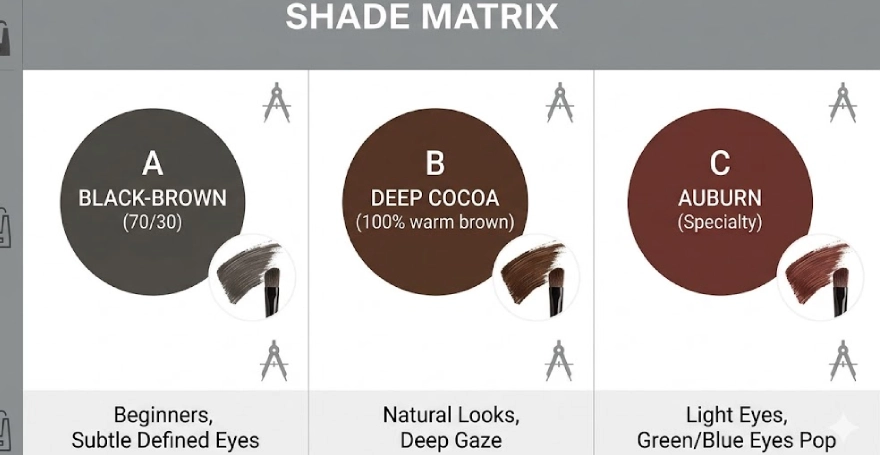
Not all brown mascaras serve the same customer. If you are adding brown to your lineup, here is a framework for choosing the right shade or shades.
Shade one: Black-Brown (approximately 70% black pigment, 30% brown pigment).
This is the entry point. Black-brown looks almost black in the tube. On the lashes, it keeps most of the definition that customers expect from black mascara, but the brown undertone softens the edge.
Best for: Customers who are hesitant to leave black entirely. Customers who have tried brown before and found it too light. First-time brown mascara users.
Black-brown converts the largest group of black-mascara users. If you only add one brown shade, start here.
Shade two: Deep Cocoa (100% warm brown, no black pigment).
This is a true brown. It adds warmth without looking red or unnatural. On black lashes, deep cocoa creates a noticeable but still natural softness.
Best for: Customers with warm skin tones or golden undertones. Customers who already wear brown mascara and want a richer shade. Customers who find black mascara too harsh for daily wear.
Deep cocoa appeals to the core natural-makeup customer. It is the shade most likely to generate repeat purchases.
Shade three: Auburn or Red-Brown.
This shade has red undertones mixed into the brown base. On black lashes, the red is subtle. On the eye area, it makes light eye colors — green, blue, hazel — appear more vibrant.
Best for: Customers with light eyes. Customers looking for something different from standard brown. A smaller but highly loyal market.
Auburn is not a volume shade, but it is an excellent differentiator. Brands that offer it stand out from competitors who only offer black-brown and deep cocoa.
Application Tips You Can Share With Your Customers
If your buyers ask how to wear brown mascara on black lashes, share these professional techniques. They also work as marketing content for your product pages or social media.
Tip one: Black on top, brown on bottom.
Many makeup artists use this technique. Black mascara on the upper lashes adds drama and definition. Brown mascara on the lower lashes defines the lower lash line without creating the shadow or dark circles that black mascara can cause.
This technique also sells two mascaras instead of one. A practical upsell.
Tip two: Pair with brown eyeliner instead of black.
Black liquid liner next to brown mascara can look mismatched. The liner reads as harsh. The mascara reads as soft. The combination confuses the eye.
Suggest smudged brown pencil liner instead. The monochromatic brown look is cohesive, easy to apply, and flattering on most eye shapes.
Tip three: Curl before applying.
Brown has less visual weight than black. Curled lashes catch more light, making the brown undertone visible even in indoor lighting. A good lash curler makes a noticeable difference.
This is a simple tip, but customers often overlook it. Remind them.
Tip four: Layer for intensity.
Some customers worry that one coat of brown mascara is not enough. Show them that two coats build intensity. The first coat adds length. The second coat adds volume and deepens the color. Three coats start to approach the darkness of black, but with a softer finish.
This gives customers control. They can wear brown subtly for daytime and build it for evening.
What This Means for Your Brand
The brown mascara on black lashes trend is not a flash in the pan. It is a response to long-term shifts in consumer behavior.
Women are wearing less makeup overall, but they are not abandoning it entirely. They want products that work with less effort, look more natural, and feel more forgiving. Brown mascara checks all three boxes.
For brands, the opportunity is clear. Adding a brown mascara option — especially black-brown or deep cocoa — captures customers who feel that black mascara no longer fits their lifestyle. It also differentiates your lineup from competitors who still treat brown as an afterthought.
The risk is minimal. Brown mascara uses the same manufacturing processes, same packaging options, and same supply chains as black mascara. The only difference is the pigment formula.
If you are already manufacturing black mascara, adding a brown SKU is a low-cost, high-potential expansion.

Summary Table: Black vs. Brown Mascara for Black Lashes
| Feature | Black Mascara | Brown Mascara |
|---|---|---|
| Best use case | Evening, photography, dramatic looks | Daily wear, office, natural looks |
| Contrast level | High (sharp definition) | Medium to low (soft definition) |
| Pairing recommendation | Bold eye makeup, black liner | Earth tones, brown liner, minimal makeup |
| Forgiveness level | Low (shows every clump) | High (more forgiving) |
| Customer profile | Traditional, bold, full-face makeup | Natural, sensitive to harsh looks, low-maintenance |
| Growth trend | Stable | Increasing (2024–2026 data) |
Manufacturing Options for Brands
If this report has convinced you to add brown mascara to your lineup, here is what we offer as a manufacturing partner.
Shades available:
- Black-Brown (70/30 blend)
- Deep Cocoa (100% warm brown)
- Auburn / Red-Brown
- Custom shades available on request
Formulation options:
- Standard washable
- Waterproof
- Tubing (removes with warm water)
- Vegan and cruelty-free
- Lash-serum infused (optional)
Packaging options:
- Standard tube with your label
- Custom tube color and shape
- Custom outer box
- Eco-friendly packaging available
MOQ and lead time:
- MOQ: 5,000 units per shade
- Sample order: 500 units for testing
- Lead time: 20–25 working days for bulk
- Rush option: 12–15 working days (additional cost)
Certifications:
- ISO 22716 (cosmetics GMP)
- Cruelty-free available
- FDA registered facility
Ready to Add Brown Mascara to Your Product Line?
We manufacture OEM brown mascara for beauty brands, distributors, and private label clients.
Contact our team to request:
- Shade card and formulation guide
- Sample units for testing
- Wholesale pricing and MOQ details