

There’s a moment almost everyone remembers the first time they wear false lashes.
You’ve chosen the style, lined up the strip, and leaned toward the mirror—only to realize the real challenge isn’t the lashes at all. It’s the glue.
Too wet, and the strip slides out of place. Too dry, and it won’t stick. Too visible, and it ruins your makeup. Too weak, and it lifts at the corners within an hour.
From the outside, eyelash glue looks simple. But from where we stand—as a manufacturer—it is one of the most misunderstood parts of the entire lash experience.
The truth is, there isn’t just “one kind” of lash glue. There are systems, materials, and use cases that behave completely differently depending on who is using them and how.
If you’ve ever wondered why one glue works perfectly while another fails, the answer usually lies in choosing the wrong type—not applying it incorrectly.
Let’s walk through it properly.
Why Lash Glue Matters More Than You Think
When people talk about lashes, they focus on curl, length, or volume. But in real use, adhesive performance determines the entire experience.
A good lash glue does three things quietly:
- Holds securely without discomfort
- Disappears visually into your makeup
- Removes cleanly without damaging your skin or lashes
A poor one does the opposite—and no lash style can compensate for that.
That’s why understanding lash glue is not just technical knowledge. It’s the difference between frustration and confidence.
Two Completely Different Systems: Personal vs Professional
Before comparing black vs clear glue, you need to understand one key distinction.
There are two fundamentally different categories of eyelash adhesive:
| Category | Who It’s For | Core Purpose |
|---|---|---|
| Personal / Strip Lash Glue | Consumers | Temporary, flexible hold |
| Professional Extension Glue | Lash artists | Long-term, semi-permanent bonding |
They may look similar in a tube, but they behave like two different materials.
Personal-use glue is designed to sit on the skin and come off easily. Professional glue is designed to bond to hair and stay for weeks.
Once you understand this, everything else becomes clearer.
The Complete Classification of Eyelash Glue
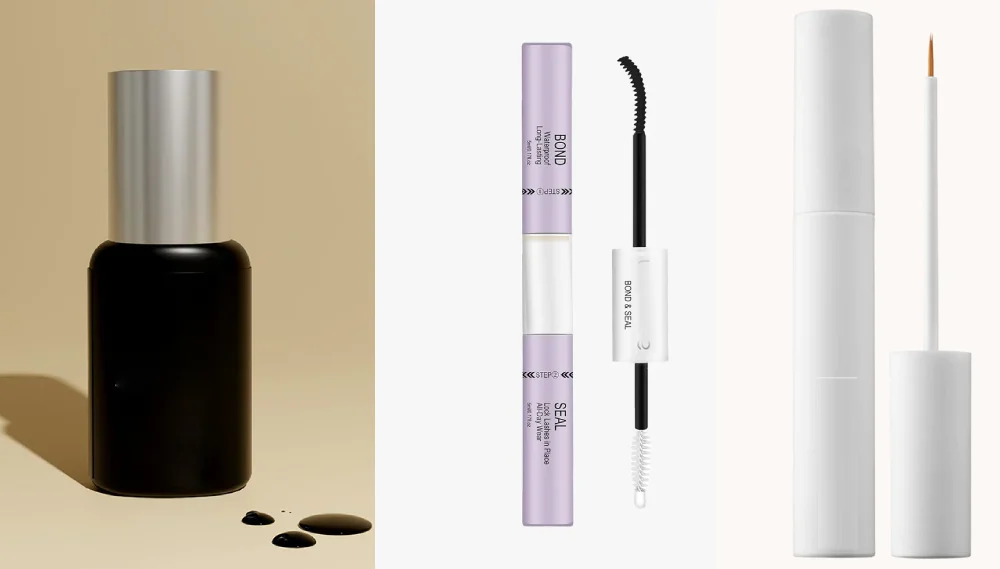
From a manufacturing perspective, lash adhesives fall into five main types. Each exists for a specific reason—and trying to use one in place of another is where most problems begin.
1. Latex-Based Lash Glue (Traditional & Gentle)
This is where many people start.
Latex-based glue has been around for years because it is simple, affordable, and relatively forgiving. It usually comes out white and dries clear, making it beginner-friendly.
But it also has limitations. The hold is softer, the drying time is longer, and for users with latex sensitivity, it can cause irritation.
It works best for occasional use—when convenience matters more than performance.
2. Rubber-Based Lash Glue (The Modern Standard)
If latex glue is the past, rubber-based glue is the present.
This is now the most widely used type for strip lashes. It forms a flexible film after drying, which means the lash band can move naturally with your eyelid instead of feeling stiff.
The hold is noticeably stronger than latex, and the drying time is more practical for daily use.
At heyme beauty, this is the category we see the highest repeat demand for—because it strikes a balance between reliability and comfort.
3. Professional Extension Glue (High-Performance Adhesive)
This is where the conversation shifts completely.
Professional lash glue is built on cyanoacrylate chemistry, the same foundation used in industrial-grade adhesives. It bonds quickly—sometimes in under a second—and is designed to last for weeks.
This is not a product for casual use. It requires:
- Controlled humidity
- Proper ventilation
- Skilled application
When used correctly, it delivers unmatched retention. When misused, it can cause discomfort or damage.
That’s why it belongs strictly in professional hands.
4. Sensitive / Low-Irritation Adhesive
Some users and clients simply cannot tolerate standard formulas.
Sensitive adhesives are designed to reduce fumes and irritation. They are often slower to cure and may sacrifice some retention, but they provide an option for those who would otherwise avoid lash services altogether.
From a manufacturing standpoint, creating a stable low-irritation formula without compromising performance is one of the most challenging areas of adhesive development.
5. No-Glue Systems (Magnetic & Self-Adhesive)
Not all lash solutions rely on liquid adhesive.
Magnetic lashes use small embedded magnets to attach to liner or a second lash strip. Self-adhesive lashes come with a pre-applied strip that activates with warmth.
They are convenient, reusable, and appealing to beginners—but they also come with trade-offs. The fit is rarely as seamless, and the hold is less dependable compared to traditional glue.
Still, they serve a purpose: reducing the barrier to entry.
Black vs Clear Eyelash Glue: What It Really Means
Now we come to the question most people start with.
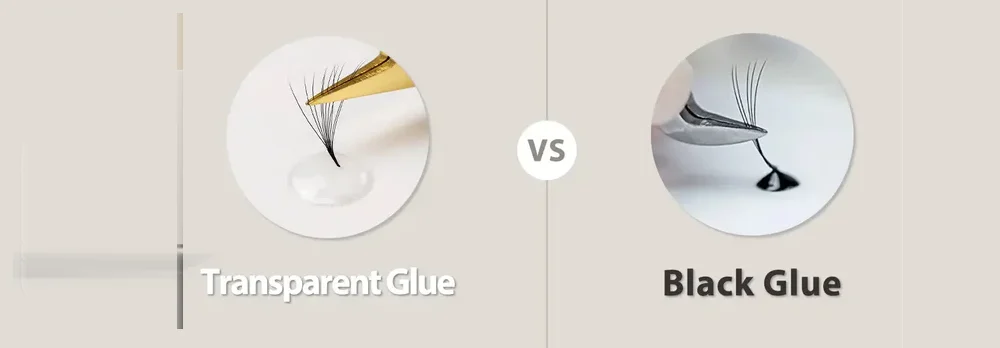
When people compare black vs clear eyelash glue, they are almost always referring to strip lash adhesives, not professional extension glue.
And the difference is not about strength—it’s about appearance and usability.
Black Lash Glue: Definition and Effect
Black glue blends into the lash line and creates a subtle eyeliner effect.
When applied correctly, it makes the lash band disappear into your makeup, giving the illusion of a fuller, darker base.
It’s often chosen by users who:
- Wear eyeliner regularly
- Prefer bold or dramatic looks
- Want a seamless lash-to-liner transition
But it also requires more precision. Any misplacement is more visible.
Clear (White-to-Clear) Lash Glue: Flexibility and Forgiveness
Clear glue is usually white when applied and turns transparent as it dries.
That transformation is what makes it so beginner-friendly. Even if the application is not perfect, the glue becomes invisible, reducing the chance of visible mistakes.
It works best for:
- Natural makeup looks
- First-time users
- Lashes with clear or thin bands
In real-world use, clear glue tends to create less stress during application—which is why it is often recommended as a starting point.
A Practical Comparison
| Feature | Black Glue | Clear Glue |
|---|---|---|
| Finish | Eyeliner effect | Invisible |
| Ease of Use | Moderate | Very easy |
| Best For | Dramatic looks | Natural / beginners |
| Error Visibility | Higher | Lower |
From a manufacturer’s perspective, both serve essential roles. One enhances the final look. The other protects the user experience.
Professional Glue: Why Color Is Not the Main Factor
In the professional world, color becomes secondary.
Most extension adhesives are black—not because black is better, but because it blends with dark lashes and creates a fuller visual base.
Clear extension glue exists, but it is used in specific situations:
- Colored lash sets
- Brown lash applications
- Clients sensitive to carbon black
For lash artists, the real concerns are:
- Drying speed
- Retention strength
- Environmental compatibility
Color is simply a visual detail.
Choosing the Right Glue: A Real-World Approach
The best glue is not the strongest or the most popular—it is the one that matches your situation.
If you are new to lashes, a clear, rubber-based glue offers the easiest learning curve.
If you wear lashes regularly and want a polished look, black glue adds depth and definition.
If you are working professionally, adhesive selection becomes technical—based on speed, humidity, and client sensitivity.
The mistake is not choosing the wrong brand. It’s choosing the wrong category.
Where Most Users Go Wrong
After years in manufacturing, we see the same patterns repeatedly.
Some users apply too much glue, thinking more equals stronger hold. Others skip the waiting time and apply lashes while the glue is still wet, leading to slipping and misalignment.
One of the most common issues is using professional-grade adhesive for personal use—often because it is perceived as “stronger.” In reality, it is simply the wrong tool.
Understanding the material is what prevents these mistakes.
A Manufacturer’s Perspective: What Defines a Good Lash Glue
From the outside, lash glue is judged by how it performs in a single use.
From our side, it is judged by something else entirely: consistency.
A high-quality adhesive must behave the same way every time:
- Same drying speed
- Same bonding strength
- Same flexibility after curing
At heyme beauty, that consistency comes from controlled formulation, stable raw materials, and strict batch testing.
Because in real use, predictability matters more than anything.
FAQ
What type of eyelash glue is best for beginners?
Clear (white-to-clear) strip lash glue is the best starting point. It dries invisible, is easy to control, and allows small mistakes without affecting your final look.
Is black eyelash glue stronger than clear glue?
No. The difference is visual, not strength. Both can offer similar hold if they are from the same formula category. Black glue simply adds an eyeliner effect.
Can I use professional lash extension glue for strip lashes?
No. Professional glue is designed for individual lash extensions and can be too strong and harsh for skin use. Always use strip lash glue for personal application.
How long does strip lash glue last?
Most strip lash glues are designed for one-day wear. With proper application, they can last 8–12 hours without lifting.
Why do my lashes keep lifting at the corners?
Common causes include:
- Applying glue too early (not waiting until tacky)
- Using too little adhesive on corners
- Choosing a glue with weak hold
What’s the safest eyelash glue for sensitive eyes?
Latex-free or low-irritation formulas are best. Clear glue is often preferred since it typically contains fewer added pigments.
Does eyelash glue damage natural lashes?
Strip lash glue does not damage natural lashes when used and removed correctly. Damage usually comes from pulling lashes off without loosening the adhesive.
Conclusion
In the end, the question is not simply black vs clear.
It’s about understanding:
- What you are applying
- How long it needs to last
- What kind of experience you want
Black glue enhances the final look. Clear glue protects the process. Professional adhesives deliver performance—but only in the right hands.
Once you see lash glue this way, the confusion disappears.
And choosing the right one becomes something much simpler:
Not a guess—but a decision.