

Here is something every lash tech learns the hard way: the curl your client asks for is not always the curl she should get.
A client walks in with a reference photo. Big D curl. Dramatic cat eye. She wants that exact look.
But her natural lashes grow downward. Or her eyelids are hooded. Or her outer corners drop.
If you copy the photo without reading her eyes first, the set will not last, will not flatter, and she will not come back.
The right curl is the one that works with her natural lash direction, eye shape, lid space, lash health, and what she actually wants to look like. Not just the trend.
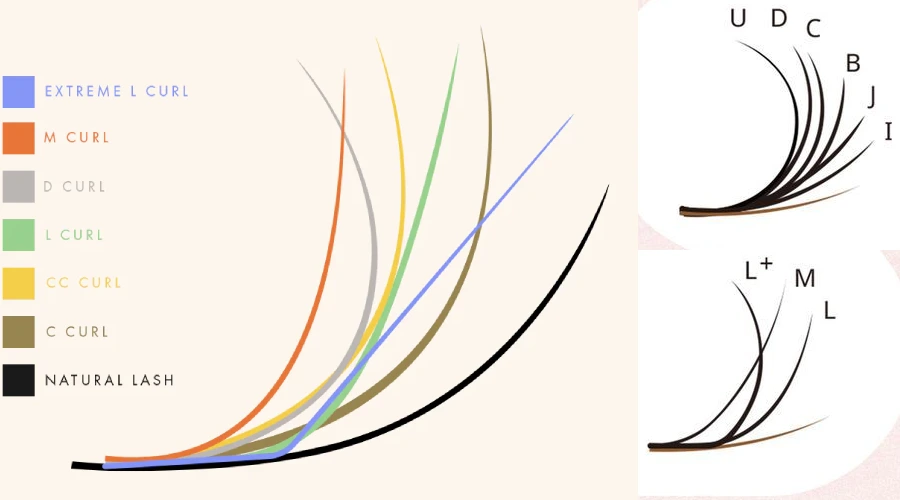
Why Curl Choice Is More Than Just a Style Decision
Beginners often think curl is about “natural” vs “dramatic.” That is part of it. But only part.
The wrong curl creates poor base contact. Poor contact means bad retention. The client might love how it looks on day one, but by day ten she is already losing extensions.
The wrong curl can also touch the eyelid, make the eyes look smaller, or sit so awkwardly that the client feels uncomfortable wearing it.
Here is what separates a good lash tech from an average one: you do not pick a curl from a chart. You read the client’s natural lashes first. Then you use curl to create the effect she wants.
That is not copying a photo. That is designing a set.
Start With the Client’s Natural Lash Direction
Before you touch any tray, look at how her natural lashes grow. I mean really look. From the front. From the side. The side view often tells you more.
Downward-growing lashes
A soft curl like B or J will disappear the moment she opens her eyes. You need lift. C curl is often the minimum. CC, L, or M curl may work better depending on her lid space.
Straight-forward lashes
C curl is your safe starting point. It gives visible lift without looking overdone. If she wants more openness, try CC.
Upward-growing lashes
A strong curl like D can actually hurt retention here. The extension may not sit flat against her natural lash. A softer curl often gives a cleaner, longer-lasting result.
Mixed directions
This is common. The inner corner grows straight. The middle lifts up. The outer corner drops. One curl across the whole eye will not work. You need to mix curls to balance the set.
Match Curl to Eye Shape, Not Just What Is Trending
Trends are fun for inspiration. But eye shape decides what actually works.
Almond eyes
You have flexibility here. C, CC, and D can all work. It really depends on the style she wants.
Round eyes
Too much curl in the center makes round eyes look even rounder. A cat eye or squirrel map with controlled curl often works better to create length.
Hooded eyes
Lid space is limited. A strong curl can touch the lid or disappear under the hood. L curl and M curl are useful here. A soft C or CC mix can also work if placed carefully.
Monolid eyes
You need a curl that lifts forward and upward without getting hidden. L curl and M curl are your friends, especially if her natural lashes grow downward.
Deep-set eyes
A little more curl can work here because the eye sits farther back. But watch the length and density. Too much can create shadow instead of openness.
Mature eyes
Soft lift almost always looks better than extreme drama. Very strong curls can look harsh. B, C, or a soft CC usually gives a cleaner, more elegant result.
Downturned eyes
Pay extra attention to the outer corner. If you go too long or too heavy there, you will pull the eye down even more. Shorten the outer corner or adjust the curl to lift the shape instead of dragging it.
Common Lash Extension Curls and When to Actually Use Them
| Curl Type | Characteristics | Best For | Things to Watch |
|---|---|---|---|
| J Curl | The softest and most natural-looking curl. | Clients with naturally lifted lashes who want a subtle enhancement. | Not ideal for downward-growing lashes because it provides minimal lift. |
| B Curl | Slightly more lift than J curl while still looking natural. | Clients who want a soft, everyday enhancement without dramatic curl. | May not provide enough visible lift for deep-set or hooded eyes. |
| C Curl | Balanced lift with a natural but noticeable effect. | Classic sets and natural-looking lash extensions. | Often considered the safest starting point for many lash artists. |
| CC Curl | More lifted than C curl but softer than D curl. | Clients wanting a more open-eye effect while keeping a wearable appearance. | A versatile option between natural and dramatic styles. |
| D Curl | Strong, dramatic lift with maximum curl visibility. | Clients seeking glamorous or bold lash looks. | Can reduce attachment area and hurt retention on naturally upward-growing lashes. |
| L Curl | Straight base with a sharply lifted tip. | Hooded eyes, monolids, and downward-growing natural lashes. | Provides excellent attachment while still creating visible lift. |
| M Curl | Creates a lifted effect with a unique curve profile. | Open-eye styling and clients needing strong visible curl. | Useful when D curl feels too dramatic but extra lift is still needed. |
How to Choose Curl for Different Lash Maps
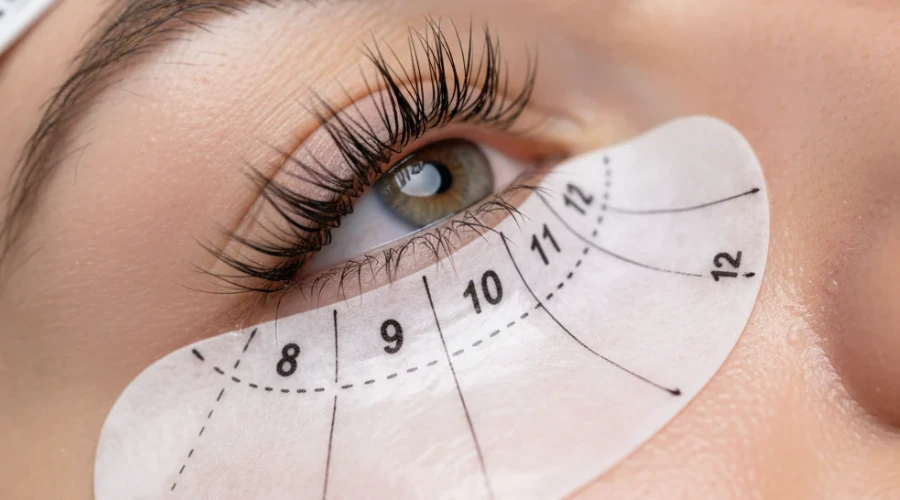
Curl and map work together. The same curl looks different depending on where you place it.
Natural map
C curl or a soft C/CC mix. Enhance her lash line without changing the eye shape too much.
Cat eye map
This is where many techs get into trouble. Clients ask for cat eye because they want lift and length at the outer corner. But if she has downturned eyes or weak outer lashes, too much length or heavy curl at the end will drag the eye down. Sometimes a shorter outer corner or a curl adjustment works better than forcing a full cat eye.
Doll eye map
Longest lengths near the center. Curl matters because too much curl in the middle can make round eyes look overly round. On the right client, CC or D creates a bright, open effect. On the wrong client, it looks surprised.
Open eye map
Goal is lift and brightness. C, CC, M, or mixed curls depending on natural lash direction. The center should open the eye without getting heavy.
Squirrel map
Good for clients who want a soft cat-eye effect but cannot support a full cat eye. Curl helps create a lifted transition without overloading the outer corner.
Wet look or wispy sets
Curl consistency matters a lot here. Uneven curl makes spikes look messy. Make sure your curl supports the texture, not fights it.
Stronger Curl Does Not Always Mean Better Lift
I see this mistake all the time. A new lash tech thinks D curl automatically gives better lift than C curl.
Not true.
If the curl is too strong for her natural lash direction, the extension will have poor base contact. Poor attachment = poor retention. The set may look lifted on day one, but it will fall out faster.
A very strong curl can also curl back too aggressively toward the lid. That makes the eyes look smaller, not more open.
The goal is not the strongest curl possible. The goal is the curl that gives visible lift, good attachment, and a flattering shape.
Sometimes a well-placed C curl looks better than a forced D curl. Sometimes L or M gives better lift than D because it actually fits the natural lash and lid shape.
Curl Mixing — When to Use More Than One Curl
Most clients do not have one lash direction across the whole eye. That is why curl mixing exists.
You might use a softer curl in the inner corner and a stronger curl through the middle. For example: C curl in the inner area, CC curl in the center. That creates a soft open effect without looking harsh.
For clients with downward outer lashes: using the same curl and length all the way to the end will drag the eye down. Adjust the curl or shorten the outer corner to create lift instead.
L curl and C curl can work together when the client has hooded eyes or downward lashes but still wants a softer transition. M curl and CC curl also pair well for lifted looks when used carefully.
The rule is simple: curl mixing should not look random. It should solve a problem — uneven lash direction, limited lid space, drooping outer corners, or a specific lash map.
How to Explain Your Curl Choice to a Client
Clients choose lashes based on photos. Your job is to help them understand why the same curl does not look the same on every person.
Here is how I handle these conversations:
Client wants dramatic D curl but her natural lashes already grow upward.
“I can use D curl, but because your natural lashes already point up, a softer curl will actually attach better and last longer. Let me show you the difference.”
Client wants a cat eye but has downturned outer corners.
“A full cat eye can actually pull your outer corner down more. I am going to use a squirrel map with slightly shorter lengths at the end. You will still get that lifted look without the drag.”
Client wants the exact look from a reference photo.
“We can create a similar effect. But I will adjust the curl and length so it works with your natural lashes and lasts better on your eyes.”
You are not saying no. You are translating what she wants into something that actually works on her eyes.
Common Mistakes Lash Techs Make When Choosing Curl
Using the same curl on everyone.
C curl is versatile. But it is not a solution for every eye.
Choosing curl only from trend photos.
That manga set or doll eye set looks beautiful online. It may fail completely on a client with different lash direction or lid space.
Using D curl every time someone asks for lift.
This works for some clients. But for others, it hurts retention and looks harsh.
Ignoring mature eyes.
Strong curls and heavy density can make mature eyes look tired or overdone. Softer curls and controlled mapping almost always create a better result.
Forgetting to write it down.
Your consultation notes should include curl, length, thickness, map, and retention feedback. Without notes, you cannot improve your work for the next appointment.
Lash Curl Consultation Checklist
Before you choose a curl, check these things. Not in your head. Actually look.
- Natural lash direction (downward, straight, upward, or mixed? Look from the side.)
- Eye shape and lid space (hooded, monolid, deep-set, downturned?)
- Desired style (natural, lifted, cat eye, doll eye, open eye, wispy, dramatic?)
- Natural lash strength (thin or weak lashes cannot support heavy volume or long extensions.)
- Previous retention (did she have poor retention before? Curl and base attachment may be part of the problem.)
- Lifestyle (glasses, contact lenses, makeup habits, sleeping position, aftercare routine.)
A good curl choice is not made from one factor. It is made from the full consultation.
Conclusion
Choosing lash extension curl is part art and part technical judgment.
The best curl is not always the strongest curl. It is the curl that fits the natural lash direction, flatters the eye shape, supports good retention, and gives the client the result she wanted — in a way that actually works on her eyes.
For lash techs and salons, stable curl quality also matters. If one tray’s C curl looks like another tray’s CC curl, your consultation becomes guesswork. If curl changes between batches, repeat clients will notice.
Good consultation only works when your products are stable enough to support your plan.
FAQs
What is the most popular lash extension curl?
C curl is the most popular because it gives visible lift while still looking wearable on most clients. But it is not the best curl for every eye shape or natural lash direction.
What curl is best for downward natural lashes?
Downward lashes need lift. C, CC, L, or M curl depending on her eye shape, lid space, and desired result.
Is D curl too dramatic for most clients?
D curl creates a strong lifted effect. It looks beautiful on the right client. But if her natural lashes already grow upward, D curl can hurt base contact and retention.
What curl is best for hooded eyes?
Hooded eyes need curls that create visible lift without touching or disappearing under the lid. L curl, M curl, C curl, or CC curl may work depending on her natural lashes.
Can lash techs mix different curls in one set?
Yes. Curl mixing helps balance uneven lash direction, lift drooping outer corners, soften inner corners, or create a more customized lash map.
Does stronger curl mean better retention?
No. If the curl does not match the natural lash direction, base contact is poor and retention suffers. Stronger does not mean better.
How should I explain curl choice to a client?
Explain that the final curl must match her natural lashes, eye shape, and desired look. You can create a similar effect to her reference photo, but you may need to adjust the curl for comfort and retention.
Why does curl consistency matter in lash extension trays?
Curl consistency helps you create predictable results. If the curl changes between trays or batches, you cannot repeat the same look for returning clients.