

If you’ve worked with clients long enough, you’ve probably heard this more than once:
“I want my lashes to look fuller… but not too much.”
That one sentence is exactly where 6D volume eyelash extensions come in.
They’re not subtle like classic lashes, and they’re not as bold or demanding as mega volume. Instead, they sit in that middle ground that most real clients are actually looking for—noticeable, soft, and wearable.
Over time, 6D hasn’t just become another option on the menu. In many salons, it quietly turns into the most requested set, the one technicians rely on when they want results that look good, last well, and don’t create problems later.
This guide isn’t about repeating definitions you’ve already seen. It’s about understanding how 6D works in real situations—on real clients, in real salons—and what that means if you’re applying lashes or sourcing them in bulk.
Where 6D Volume Really Sits in the Market
On paper, lash categories look clean: classic, hybrid, volume, mega volume. In practice, things are messier.
Classic lashes are safe, predictable, and easy to manage—but for many clients, they’re just not enough. The result can look clean, but not transformative.
Mega volume goes in the opposite direction. It creates drama, density, and impact—but it also demands more skill, more time, and more caution. Not every technician wants to offer it, and not every client can wear it comfortably.
6D volume lands right in between.
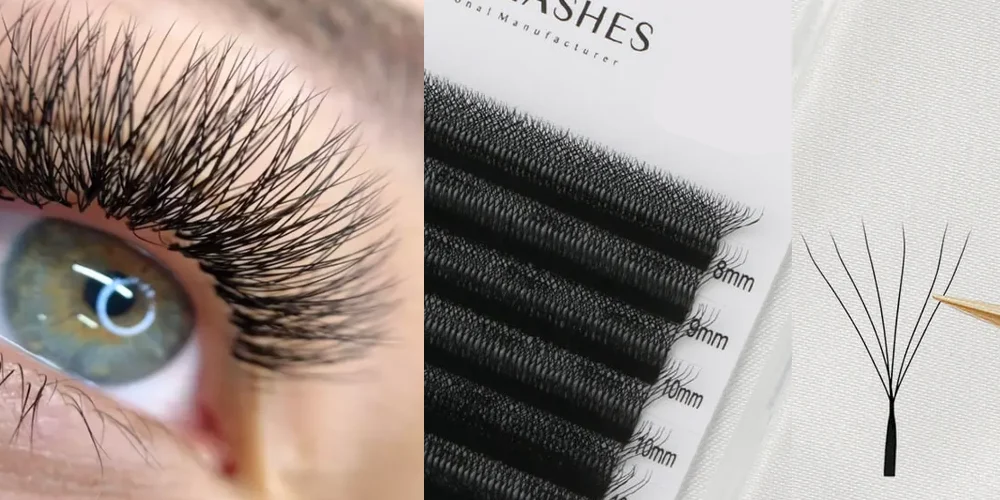
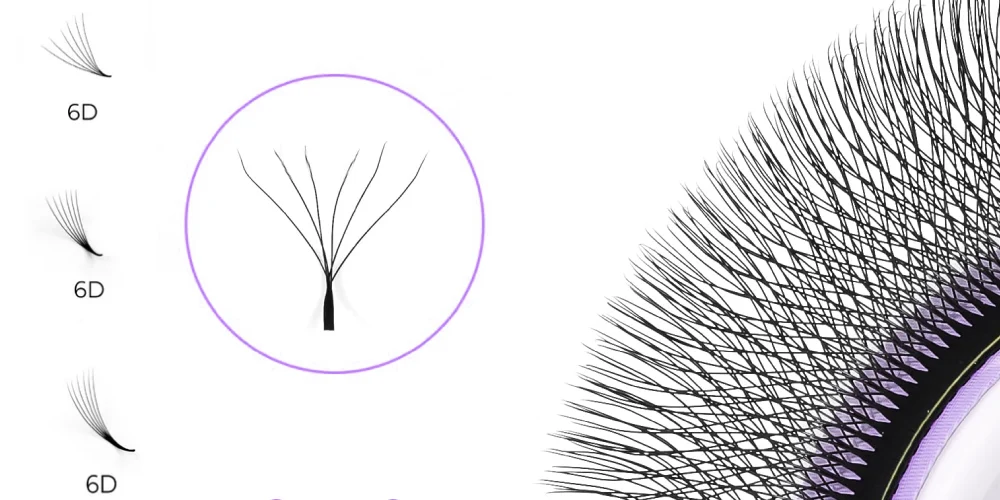
A 6D fan means six fine extensions are applied to one natural lash. That sounds like a lot, but because the fibers are thin, the final effect doesn’t feel heavy. Instead, it creates a soft, full lash line that fills gaps and adds dimension without overwhelming the eye.
That balance is the reason it works so well commercially. It’s not just about how it looks—it’s about how consistently it performs across different clients.

Why 6D Becomes the “Default Upgrade” in Salons
In real salon settings, efficiency matters just as much as aesthetics.
You don’t just need a set that looks good—you need something that:
- Works for a wide range of clients
- Doesn’t slow down your workflow
- Doesn’t create retention issues or complaints
6D checks those boxes more often than other styles.
When a client with sparse lashes wants something fuller, 6D is an easy recommendation. When someone used to classic lashes wants to “try something more,” 6D is a safe step up.
Over time, it becomes less of a specialty service and more of a baseline premium option.
Handmade vs Premade: What Actually Makes a Difference
This is one of the biggest decisions behind the scenes, even if clients never see it.
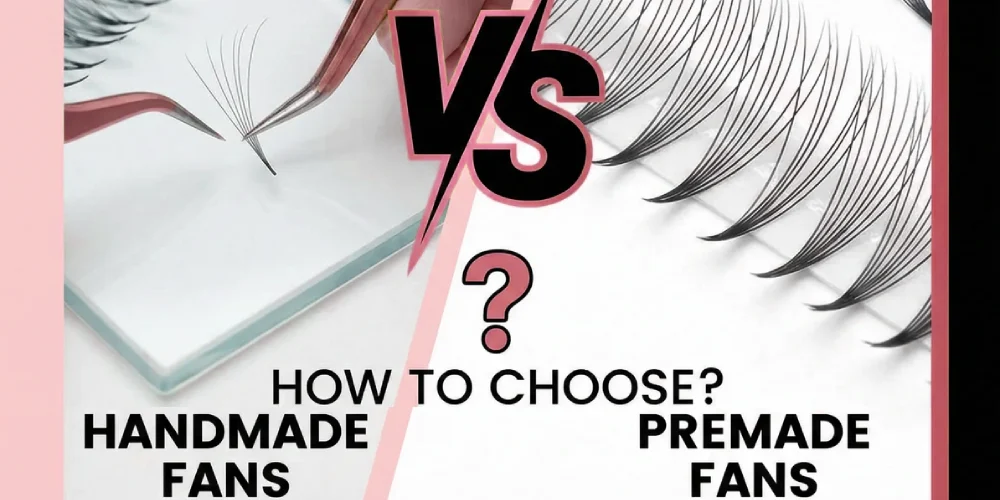
Handmade fans are often associated with craftsmanship. A skilled technician can adjust the width, shape, and density on the spot, tailoring each fan to the client’s lash condition.
But there’s another side to that.
Handmade fans depend heavily on consistency—and consistency is hard to maintain across long working hours or multiple technicians in the same salon. Small variations in fan shape or base thickness can affect how the lashes sit and how long they last.
Premade fans solve a different problem.
Because they’re produced in controlled conditions, the structure is more uniform. Each fan opens the same way, the base behaves the same way, and application becomes more predictable.
For busy salons or growing teams, that predictability matters. It reduces application time, shortens the learning curve for newer technicians, and helps maintain consistent results across clients.
From a buyer’s perspective, this is where product quality becomes visible. A well-made premade fan doesn’t just save time—it removes variables.
The Small Details That Change the Final Look
Two 6D sets can look completely different, even if they use the same number of lashes.
That’s because the visual result depends on how the fan is shaped and how the lashes are mapped.
A wide, open fan creates a soft, airy effect. This is what most people think of when they imagine volume lashes—fluffy, light, and evenly distributed.
A narrow, closed fan creates something else entirely. The lashes appear darker and more defined, almost like a fresh coat of mascara. This “wet look” has become more popular recently, especially for clients who want a sharper finish.
Then there’s mapping.
A cat-eye design pulls attention outward and elongates the eye. A doll-eye mapping opens the center and creates a rounder look. Wispy styles add texture and break uniformity, which can make the set feel more natural, even when it’s dense.
What this really means is that 6D is not a single style. It’s a framework that can be adjusted in multiple directions.
Where Things Go Wrong (And Why It’s Not Always Technique)
Ask any experienced technician about volume lashes, and you’ll start hearing the same frustrations.
Fans that don’t open properly. Bases that feel too thick. Lashes that look uneven even when placed correctly.
It’s easy to assume these are technique problems, but that’s not always the case.
Sometimes the issue starts earlier—with the product itself.
If the fan base is too bulky, it’s harder to attach cleanly. If the fibers aren’t evenly distributed, the fan won’t sit symmetrically. If the curl isn’t consistent, the final set will look uneven no matter how carefully it’s applied.
This is why many common mistakes—like using too much adhesive or struggling with placement—are often reactions to inconsistent materials.
When the product is stable, the technique becomes easier to execute.
Safety Isn’t About the Number—It’s About the Weight
One of the most common questions around 6D lashes is whether they’re too heavy.
The answer depends less on the number “6” and more on how the lashes are made.
A properly designed 6D fan uses very fine fibers, so even with six extensions, the total weight stays within what a healthy natural lash can support.
Problems usually happen when:
- The diameter is too thick
- The base is overloaded with adhesive
- The fan isn’t balanced properly
In those cases, the issue isn’t the concept of 6D—it’s the execution.
For salons, this is where product selection becomes a form of risk control. Consistent, lightweight fans reduce the chances of overloading natural lashes and improve overall comfort.
What Clients Actually Notice
Clients rarely talk about diameters or fan symmetry.
What they notice is simpler:
- Do their lashes feel heavy?
- Do they last?
- Do they still look good after two weeks?
6D performs well in all three areas when done correctly.
It fills gaps in the lash line, making the eyes look more defined without needing heavy makeup. It creates a noticeable difference without crossing into extremes. And with proper aftercare, it holds up well through daily routines.
That’s why clients often come back asking for the same set—even if they don’t know it’s called “6D.”
Retention: Where Technique and Product Meet
Retention is where everything comes together.
Even the best application technique can’t fully compensate for inconsistent lash quality. And even high-quality lashes won’t perform well if they’re applied poorly.
With 6D, good retention typically falls in the three to five week range, with refills needed every two to three weeks.
When retention drops below that, it’s usually worth looking at both sides:
- Is the adhesive being controlled properly?
- Is the fan base clean and thin enough?
- Are the lashes consistent across the tray?
Small improvements in any of these areas can make a noticeable difference over time.
A Real-World Example
Take a client with naturally sparse lashes and visible gaps along the lash line.
Using 6D fans with a fine diameter, a technician can build density without adding weight. The gaps disappear, the lash line looks fuller, and the overall shape of the eye becomes more defined.
Two weeks later, if the product and application are both solid, most of the set is still intact. The client doesn’t feel discomfort, and the refill process is straightforward.
This kind of result isn’t exceptional—it’s what 6D is designed to deliver when everything is working as it should.
Choosing the Right Supplier: What Actually Matters
For salon owners, distributors, or anyone buying in volume, the conversation eventually shifts from technique to supply.
At that point, the priorities change.
You’re no longer just asking, “Does this look good?”
You’re asking:
- Is it consistent across batches?
- Will different technicians get the same result?
- Can I rely on this product week after week?
The most important factors tend to be:
- Stable fan structure
- Thin, clean bases
- Reliable curl retention
- Consistent length and thickness
- The ability to scale supply without quality drops
This is where experienced manufacturers stand apart.
Brands like Heyme Beauty focus on controlling the variables that affect real-world performance—fan symmetry, base precision, and production consistency. For buyers, that translates into fewer surprises and more predictable results across different clients and technicians.
FAQ
What exactly are 6D Volume Eyelash Extensions?
6D Volume involves applying a handmade “fan” of 6 ultra-lightweight extensions onto a single natural lash. This technique creates a multidimensional, high-density look that is significantly fuller than classic or 3D sets, providing a dramatic, glamorous effect without the need for mascara.
Is 6D Volume safe for my natural eyelashes?
Absolutely, when applied by a professional. Our 6D lashes are manufactured from premium, ultra-fine PBT fibers (typically 0.05mm or 0.07mm diameter). Because each extension is so light, the total weight of a 6D fan is often less than a single thick classic lash, ensuring zero damage to your natural lash cycle.
How long do 6D Volume Lashes typically last?
With proper aftercare, 6D volume lashes can last between 4 to 6 weeks. Due to the high density and multiple attachment points of the fan, gaps are less noticeable as your natural lashes shed, making them a favorite for clients seeking a low-maintenance yet consistently full appearance.
What is the difference between 6D Volume and Mega Volume?
6D is considered the “sweet spot” of volume—dramatic yet sophisticated. While Mega Volume (10D to 15D) offers an extremely dense, blacked-out look, 6D provides a fluffy, textured finish that enhances the eyes without looking overly heavy, making it the top choice for weddings and special events.
How should I care for my 6D lashes to maintain their fluffiness?
To keep your 6D fans open and voluminous, avoid oil-based cleansers and avoid rubbing your eyes. We recommend using a specialized lint-free micro swab for cleaning the lash line and gently brushing them daily with a clean spoolie to prevent tangling and maintain that signature 6D fluff.
Conclusion
6D volume eyelash extensions aren’t popular by accident. They’ve earned their place because they solve a very practical problem: how to create noticeable, reliable results without making the process harder than it needs to be.
For technicians, they offer flexibility without unnecessary complexity.
For clients, they deliver visible improvement without discomfort.
For businesses, they provide a service that can be repeated consistently at scale.
And in an industry where consistency is often harder to achieve than creativity, that balance matters more than anything else.